
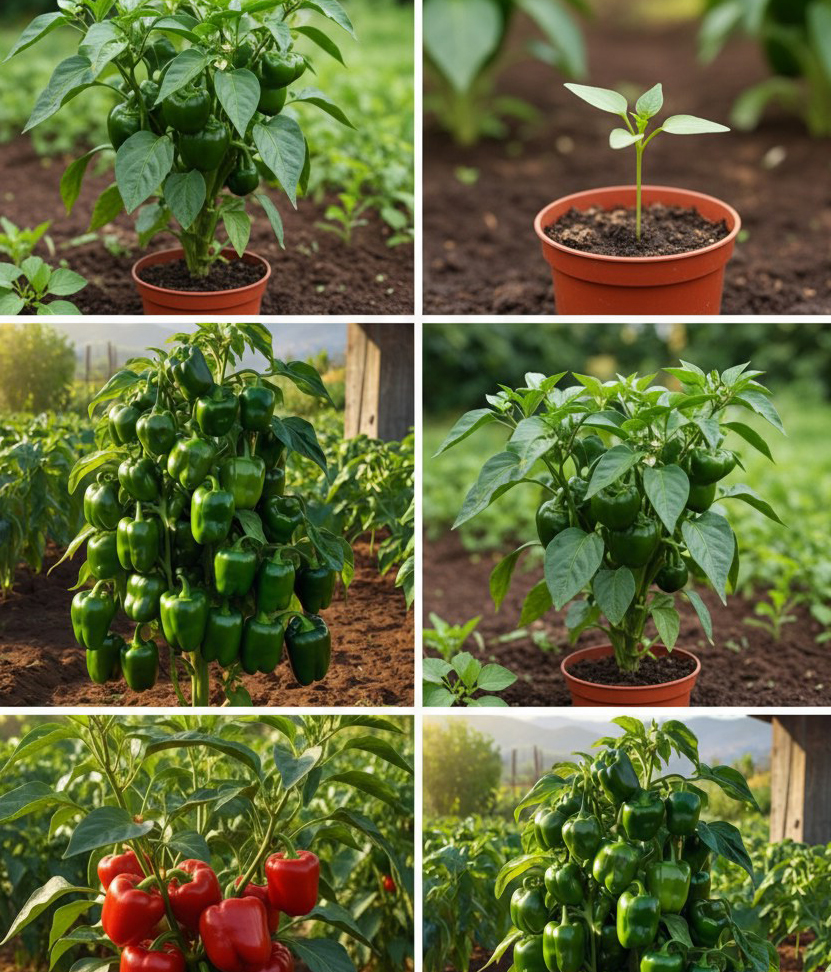
Sweet peppers are a garden favorite for their vibrant colors, crisp texture, and sweet, juicy flavor. But growing large, healthy fruits takes more than just planting and watering. To maximize your harvest, it’s essential to provide timely care — especially at the early stages of development.
There’s one specific set of actions you can take now that will dramatically improve fruit size, quantity, and plant health. Whether you’re growing bell peppers in the ground, in containers, or in raised beds, this method will help you get a high yield of full-sized, sweet fruits.
Why Peppers Need Early Support
Sweet peppers are sensitive to temperature, soil nutrients, and water conditions. They tend to be slow growers early in the season and may drop their blossoms or produce small fruits if they’re stressed or undernourished.
By giving them the right support just after transplanting or during early growth, you help the plants build a strong root system, develop sturdy stems, and set up for consistent flowering and fruiting.
Step 1: Support Root Development and Early Growth
Start by feeding your peppers with a nutrient-rich tonic that targets root strength and early vegetative growth. Here’s a simple homemade solution that works wonders in the garden.
What You’ll Need:
-
- 1 liter (1 quart) of warm water
- 1 tablespoon of wood ash (for potassium and trace minerals)
- 1 tablespoon of baking soda (to balance pH and discourage soil pathogens)
- 1 teaspoon of dry yeast (natural growth stimulant)
Optional:
-
- 1 tablespoon of sugar or molasses (to activate soil microbes and help yeast grow)
How to Prepare and Use:
-
- In a container, mix warm water with the wood ash, baking soda, and yeast.
- Stir thoroughly. If adding sugar or molasses, do so after the solids are dissolved.
- Let the mixture sit for 1 hour to activate the yeast and allow nutrients to blend.
- Pour 200–250 ml (about 1 cup) of the solution around the base of each pepper plant.
- Use once every two weeks during the first month after transplanting.
This feed stimulates microbial activity in the soil, promotes nutrient uptake, and enhances root development — all key for vigorous growth and early flower formation.
Step 2: Prune the First Buds (Yes, Really!)
One of the most counterintuitive but effective techniques for larger harvests is pinching off the first flower buds — especially those that form at the very top of the main stem.
While it may seem like a loss, removing the first flowers allows the plant to redirect energy into stronger vegetative growth and more prolific branching. The result: more flowering sites and, ultimately, more and larger peppers later in the season.
Once the plant has developed a few strong side shoots and reaches about 30–40 cm (12–16 inches) tall, allow new buds to develop freely.
Step 3: Support Flowering with a Potassium Boost
Once the plants begin to form flower clusters, it’s time to switch to a bloom-supporting feed high in potassium and phosphorus.
Try this DIY fruiting booster:
Ingredients:
-
- 1 banana peel (chopped)
- 1 tablespoon of wood ash
- 1 liter (1 quart) of water
Let this mixture steep for 24 hours, then strain and apply around the plant base. The banana peel provides potassium and phosphorus, while the ash adds calcium and micronutrients that support strong fruit development.
Use once every 10–14 days during the flowering and fruit-setting period.