
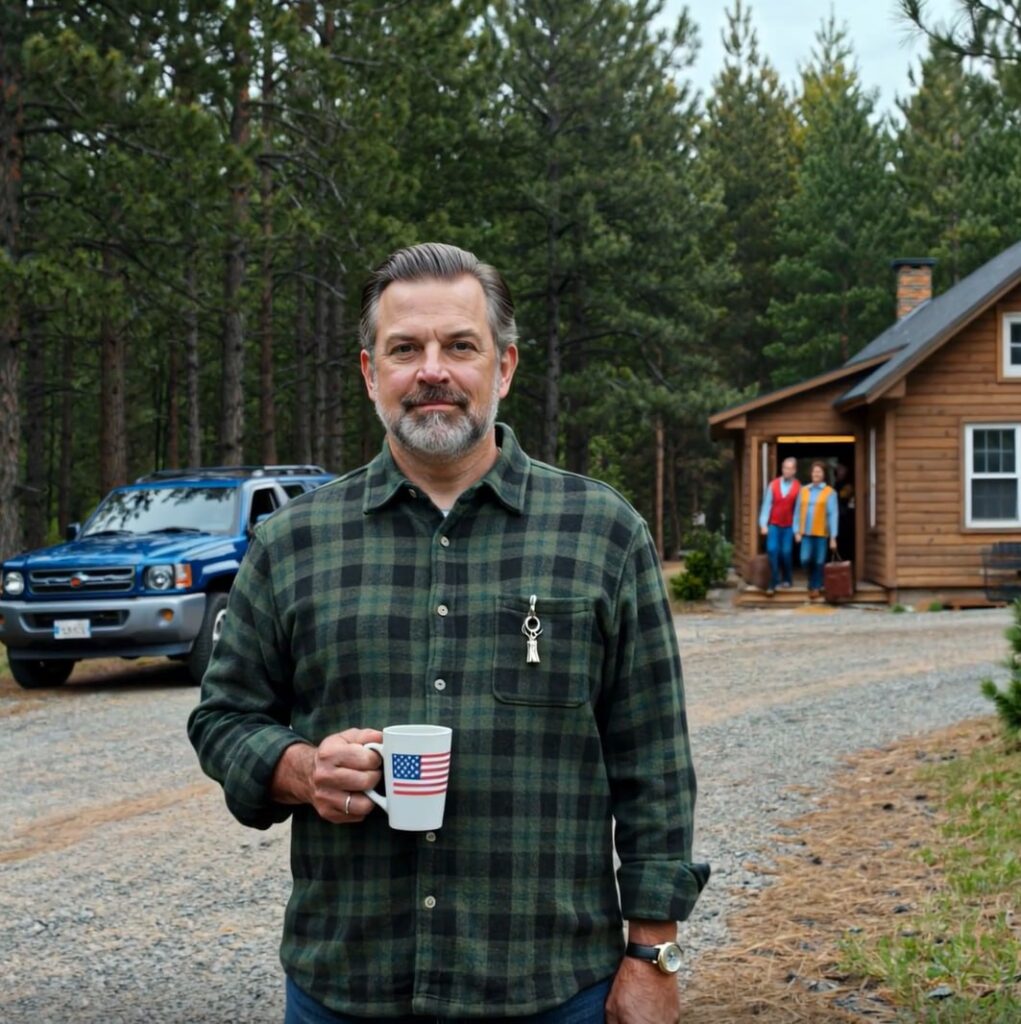
The keys rested in my palm, their metal edges catching the afternoon light streaming through Rebecca Marsh’s office window. Outside, March winds pushed dried brush across the Wyoming strip mall parking lot, past weathered trucks bearing local plates and sun-faded stickers celebrating hunting seasons and high school athletics. The weight of those keys felt significant, substantial in a way that transcended their physical mass.
“Congratulations, Mr. Nelson.” Rebecca’s smile carried genuine warmth as she aligned the final documents with practiced precision. “You’re officially a property owner in Park County.”
That morning, I had authorized a cashier’s check for one hundred eighty-five thousand dollars. Four decades of my life compressed into that single transaction. Forty years of accepting overtime shifts when my body begged for rest. Forty years of packing lunches in brown paper bags instead of joining colleagues at restaurants. Forty years of postponing vacations, deferring pleasures, accumulating savings one paycheck at a time. All of it converted now into eight hundred square feet of timber construction and profound solitude, situated twelve miles from the nearest town.
“Thank you.” My voice emerged steady as I pocketed the keys and extended my hand. My fingers didn’t tremble the way I’d half expected them to.
The drive west from her office carried me along Highway 14, past service stations where American flags snapped violently in the persistent wind, past modest motels advertising special rates for hunters. The roads narrowed progressively with each turn I navigated. Smooth pavement transitioned to loose gravel. Gravel gave way to packed dirt. My cell phone signal diminished from four bars to two, then one, before vanishing entirely.
I stopped at a small general store that appeared frozen in time, its weathered exterior suggesting it had occupied this exact spot since the Eisenhower years. Inside, I selected coffee, bread, eggs, butter, and other essentials. The woman behind the counter wore a sweatshirt bearing the local high school mascot.
“Visiting the area?” she asked while scanning my items.
“Living here,” I replied.
She nodded as though I’d shared something profound rather than stating a simple fact.
The final two miles climbed through pine forest so dense that afternoon sunlight barely penetrated the canopy. When the cabin materialized in its clearing, I pulled my truck to the shoulder and killed the engine.
Four elk grazed approximately fifty yards beyond the porch, their winter coats thick and dark against patches of lingering snow. They lifted their heads in unison, studied my vehicle with apparent curiosity, then resumed grazing. One flicked an ear at some invisible irritation.
I remained motionless for five full minutes, simply observing them. No traffic noise. No sirens wailing in the distance. No voices bleeding through thin apartment walls the way they had in Denver. Just wind moving through trees, animals pursuing their ancient routines, and my own breathing.
The cabin matched the online photographs exactly. Weathered cedar logs formed the exterior walls. A green metal roof crowned the structure. A stone chimney rose along one side. A modest American flag had been tacked beneath the porch roof’s edge, where it stirred gently in the mountain breeze. The building was small, certainly, but it belonged to me.
I unlocked the entrance and stepped across the threshold. The interior air carried scents of pine resin and old wood smoke. The main room incorporated a compact kitchenette. The bedroom offered barely enough space for a double bed. The bathroom featured a shower stall I would need to enter sideways given my frame.
Perfect.
I unloaded my truck with methodical precision, approaching the task the same way I’d approached every construction project during four decades of professional work. Tools found designated spots on the pegboard mounted above the workbench. A hammer here, wrenches arranged by size there, a handsaw positioned within easy reach. Books formed neat stacks on the shelf, organized by subject matter. Engineering manuals occupied one section, history texts another, plus three novels I’d been postponing for a decade. The coffee maker claimed its position on the counter where morning sunlight through the east-facing window would illuminate it first each day.
Every item placed with deliberate intention, transforming moving chaos into functional order.
By the time I finished arranging everything, the sun had begun its descent behind the Absaroka Mountains. I brewed coffee despite the late hour, no longer constrained by schedules or sensible bedtimes, and carried my mug outside to the porch.
The rocking chair I’d purchased specifically for this moment creaked under my weight as I settled into it. The elk had moved deeper into the clearing. A hawk traced lazy circles overhead, riding invisible thermal currents. Somewhere far in the distance, a truck engine hummed along the highway, faint as a half-forgotten memory.
I extracted my phone and dialed my daughter.
“Dad.” Bula’s voice arrived bright and immediate, Denver civilization on one end of the connection, Wyoming wilderness on the other. “Are you there? Did you actually do it?”
“Signed the papers this morning,” I confirmed. “I’m sitting on my porch right now watching elk graze.”
“I’m so incredibly proud of you.” The warmth saturating her tone made my chest constrict. “You earned this. Forty years of hard work.”
I sipped the coffee. “Forty years I spent dreaming about mornings where I’d drink coffee while watching wildlife instead of highway traffic crawling along Interstate 25.”
“You deserve every single moment of peace,” she said softly. A pause stretched between us. “Cornelius has been dealing with so much stress from work lately. Sometimes I forget what peaceful even looks like anymore.”
Something in her phrasing made me hesitate. “Everything alright with you two?”
“Oh, fine. You know how middle management is. Constant pressure.” She laughed, but the sound seemed thin, stretched too taut.
“When are you planning to visit?”
“Anytime you want, honey. You know that.”
We talked for ten more minutes. She described her students at the public school in Denver, detailed her garden plans for their subdivision yard, navigated through safe conversational territory.
When we disconnected, I remained seated watching the sun paint the mountains in shades of orange and purple. The coffee had gone cold, but I drank it regardless.
My phone rang again an hour later.
“My parents lost their house.”
Cornelius dispensed with customary greetings. His voice carried the flat, affectless tone he employed for conference calls from his generic home office back in Colorado, probably still dressed in his work shirt with sleeves rolled to the elbows, tie discarded, laptop glowing.
“They’re moving in with you for a couple months until they locate another place.”
My hand tightened involuntarily on the chair’s armrest. “Wait, hold on. Cornelius, I just purchased this property. It’s barely adequate for me alone, much less—”
“For a couple months until they find something permanent,” he repeated mechanically, as though reciting from prepared notes.
“I bought this place specifically to live alone. I invested my entire retirement savings in—”
“Then you should have stayed in Denver,” he interrupted. “Friday morning. I’ll text you their arrival time.”
The connection terminated.
I sat motionless, still holding the phone, staring at the clearing where the elk had been grazing. They’d moved on. Smart creatures. My knuckles had blanched white against the armrest’s wood. I forced myself to release my grip, flex my fingers, regulate my breathing.
Inside, I poured another coffee I didn’t actually want and sat at the kitchen table. From my jacket pocket, I retrieved a small notepad and pen, the engineering pad I’d carried for forty years, its grid paper designed for sketches and calculations.
I began writing. Not emotional venting or angry protests. Questions. Timeline estimates. Resource assessments. Could the cabin physically support three additional occupants? What about winter access along these dirt roads? What was the heating system’s actual capacity? What would repeated trips between Denver and northwest Wyoming cost in fuel and vehicle wear?
The cabin keys rested on the table beside my notepad. An hour earlier, they’d represented freedom. Now they represented something entirely different.
I picked them up, registered their weight, set them down with careful deliberation.
For forty years I’d been the reasonable one, the family peacemaker, the man who swallowed inconvenience to maintain domestic harmony.
Not anymore.
Dawn arrived through the small kitchen windows and discovered me still seated at the table. Empty coffee cups formed a semicircle around my notepad, which had accumulated dense lists, diagrams, questions written and rewritten multiple times.
I hadn’t slept. I didn’t feel like I needed sleep. My mind operated with unusual clarity, focused and crystalline, running on something cleaner than rest. Purpose.
I brewed fresh coffee and studied my accumulated notes. Then I cleaned up, loaded necessary items into my truck, and drove back toward Cody.
Twenty minutes west of town, positioned just off the highway tourists used to reach Yellowstone’s East Entrance, the Yellowstone National Park ranger station occupied a low profile against the landscape. The modern building featured stone and timber cladding designed to blend with the surrounding foothills.
Inside, educational displays illustrated wolf pack territories, bear activity patterns, elk migration routes across detailed maps of Wyoming and Montana.
A ranger, perhaps forty years old, with the weathered complexion and sun-creased eyes characteristic of someone who spent more time outdoors than inside office buildings, glanced up from his desk. An American flag patch adorned his uniform sleeve.
“Help you with something?”
“I just relocated up from Denver,” I explained. “Bought property off County Road 14.”
“Beautiful area.” He smiled warmly. “You’ll want to exercise caution with food storage. We get significant bear activity come spring.”
“What about wolves?” I asked. “I’ve heard they’ve been reintroduced to the region.”
“Reintroduction program’s been quite successful,” he confirmed, standing and moving to a wall map where colored pins marked various locations. “They’re typically shy around humans, but they’ve got an extraordinary sense of smell. Can detect prey or food sources from miles away. You planning to hunt?”
“No, just gathering information. I want to be properly prepared.”
“Smart approach.” He handed me a pamphlet bearing the National Park Service logo. “Keep your property clean. Don’t leave attractants exposed unless you want unexpected visitors.”
I recorded careful notes in my field notebook. Wind direction patterns, pack territorial boundaries, seasonal behavior variations. I thanked him warmly, mentioned again that I’d relocated from Denver and was still learning mountain life protocols. Every word calibrated to convey exactly the right impression: concerned, naïve, precisely what he’d expect from a nervous newcomer transitioning from urban environments.
Back in Cody, I located an outdoor supply store, the type with mounted elk heads decorating the walls and racks of camouflage gear displayed under fluorescent lighting. The camera section occupied space between hunting equipment and basic home security systems.
“Looking for wildlife cameras,” I told the clerk. “Want to monitor bear activity near my property.”
He demonstrated two models featuring motion activation, night vision capabilities, and cellular connectivity. “These will serve you well. We get numerous folks wanting to monitor their land.”
“Two of these,” I said.
“Three hundred forty dollars,” he replied, processing the transaction.
I paid with cash.
Wednesday afternoon at the cabin, I installed both cameras methodically. One covered the driveway approach. The other angled toward the front porch and clearing beyond. I tested the motion sensors, verified signal strength, adjusted positions repeatedly until coverage was optimal.
The engineering component of my brain, honed through forty years of solving structural problems, found deep satisfaction in the precision work. Conceal the cameras sufficiently to remain unobtrusive. Position them for maximum capture effectiveness. Test, adjust, verify results.
Both cameras successfully connected to my phone despite only one bar of cellular service. Weak signal, but functional.
Thursday morning, I drove back to Cody once more. The butcher shop occupied a side street off the main commercial district, the kind of establishment serving ranchers and local restaurants, featuring a hand-painted sign and a faded American flag in the front window.
“Need twenty pounds of beef scraps,” I said. “Organ meat, fat trimmings. For dogs.”
The butcher didn’t react with surprise or curiosity. “You got it.”
Forty-five dollars later, I walked out carrying meat wrapped in thick white paper and loaded into coolers I’d brought in the truck bed. The smell manifested immediately and powerfully. Blood, fat, raw flesh.
Thursday afternoon, I stood in the clearing behind my cabin with the coolers open before me. Wind originated from the west. I verified direction the old-fashioned way, wetting my finger and holding it aloft.
I walked thirty yards from the structure, positioning myself upwind. Then I distributed the meat in three separate piles, spreading them to maximize scent dispersion through the forest. Not random placement, but calculated. Close enough to draw predators to the general area, distant enough that they’d focus on the meat piles rather than the building itself.
I wasn’t attempting to endanger anyone.
I was attempting to educate them about reality.
Back inside the cabin, I moved through each room systematically. Locked windows. Disabled unnecessary electrical systems. Set the thermostat to minimal heat, protecting my investment while simultaneously establishing my trap.
I paused at the door, took one final look at the space I’d inhabited for less than three complete days, and departed without hesitation.
The drive back to Denver consumed approximately five hours, carrying me down from high country back into suburban sprawl, fast-food chains, endless traffic lanes. I arrived at my old house just before midnight. I still owned it, hadn’t sold it yet, so it sat partially furnished but hollow, echoing.
I unloaded my truck, established my laptop in the living room, positioned my phone where I could monitor the camera feeds continuously. Then I waited.
Friday morning at ten o’clock, a sedan materialized on my phone screen, rolling up my Wyoming driveway in crisp morning light. Leonard and Grace emerged, dressed for what they’d clearly conceptualized as rustic inconvenience rather than genuine wilderness.
They surveyed their surroundings with expressions I recognized even on the small display screen. Displeasure. Judgment. A quiet calculation of how much discomfort they’d be forced to tolerate.
The camera microphone captured their voices with surprising clarity.
“This is where he’s living now?” Grace wrinkled her nose visibly. “It smells like pine trees and dirt.”
“At least it’s free accommodation,” Leonard said, walking toward the cabin entrance. “We’ll stay a few months. Let Cornelius figure out the next step. I don’t understand why we had to drive all the way out to—”
Grace stopped abruptly. Froze completely.
“Leonard,” she whispered urgently. “Wolves.”
Three shapes emerged from the northwest tree line. Gray and brown bodies moved with cautious purpose toward the meat piles. Not aggressive, not interested in the humans at all, just hungry.
Leonard saw them and his face drained of color.
“Get in the car. Get in the car right now.”
They ran. Grace stumbled, recovered her balance. Car doors slammed shut. The engine roared to life, and gravel sprayed wildly as they reversed, then accelerated back down the driveway, fleeing toward highways and their manicured suburban lawns somewhere far from Wyoming.
The wolves, completely unbothered by the human drama, continued toward the meat.
I closed the laptop and retrieved my coffee. Took a slow, deliberate sip.
Twenty minutes elapsed before my phone rang.
“What did you do?” Cornelius’s voice had shed its businesslike edge entirely. Now it contained pure fury. “My parents nearly got attacked by wild animals.”
“I didn’t do anything,” I responded calmly. “I warned you this property sits in genuine wilderness. You created this situation.”
“You baited those animals deliberately.”
“Cornelius, I live in wolf country. Wolves inhabit these mountains. This is their natural home. Perhaps you should have inquired before assuming you could appropriate mine as a retirement facility for your parents.”
“You’re completely insane. I’m going to—”
“You’re going to what?” I asked quietly. “Sue me because wildlife exists on my property? I wish you luck with that legal strategy.”
“This isn’t finished,” he snapped.
“No,” I agreed, “it’s just beginning.”
I pressed the end call button, set the phone down deliberately, reopened the laptop, and watched the wolves finish consuming the meat before disappearing back into the forest.
Outside my Denver window, the mountains rose in the distance, blue and remote. Somewhere up there, my cabin waited in its clearing. I’d been planning defense, constructing barriers. But sitting there, watching the recorded footage one more time, I recognized something had fundamentally shifted.
This wasn’t about defense anymore.
Two weeks passed before Cornelius made his next move. I spent those days attempting to settle into the routine I’d originally imagined. Splitting my time between Denver and Wyoming while tying up remaining loose ends. Coffee on the cabin porch at dawn, watching elk drift through the clearing like ghosts. Reading books I’d postponed for decades.
But the peace felt conditional now, fragile, like standing on ice that might fracture beneath my weight at any moment. I checked my phone more frequently than I wanted to admit, kept the camera feeds open on my laptop constantly, listened for vehicles approaching along the dirt road.
Mid-April brought warmer afternoons and the first serious wildflowers along Wyoming highway shoulders, purple and yellow blooms emerging against the brown earth. I was splitting firewood beside the cabin when my phone rang.
“Dad, please.” Bula’s voice fractured on the second word. She was crying, unmistakably crying. “Cornelius showed me the footage of the wolves. That situation could have been so much worse.”
I set down the axe and walked to the porch, looking out over the clearing that had nearly hosted my uninvited guests.
“Bula, honey, wolves live in these mountains naturally. I didn’t create that situation. I explicitly warned Cornelius this wasn’t appropriate housing for his parents.”
“But you knew they were coming. You could have done something to make it safer for them.”
The script was transparent. Every phrase sounded rehearsed, coached. My daughter transformed into his messenger, his advocate.
“I purchased this property for solitude,” I said, maintaining level vocal control. “No one requested my consent before deciding I would host guests. But I’m willing to meet with Leonard and Grace to discuss alternative options.”
“You are?” Hope flooded her tone immediately. “Really?”
“I’ll meet them in town,” I specified. “Neutral ground. We’ll have a conversation about possibilities.”
After we disconnected, I stood watching clouds move across the mountain peaks. She genuinely believed she was helping, facilitating family harmony. That made everything worse.
Two days later, I drove to Cody for the scheduled meeting. I’d invested both preceding evenings in preparation, researching comparable rental prices for rural Wyoming properties, printing three copies of a standard short-term rental agreement I’d drafted, reviewing property law basics on my laptop. I practiced my presentation using the truck’s rearview mirror that morning, testing different phrasings until I identified the optimal balance. Firm but not hostile. Clear but not cold.
The Grizzly Peak Café occupied prime real estate on Main Street, a small local establishment featuring wooden tables, landscape photographs of Yellowstone and the Tetons decorating the walls, large windows facing passing pickups and tourists driving rental SUVs.
I arrived fifteen minutes early and selected my position with tactical consideration. A table near the window, back positioned against the wall, clear view of the entrance, within range of the security camera I’d spotted mounted above the register. I ordered black coffee and waited.
Leonard and Grace arrived precisely on time. Cornelius must have transported them from Colorado, probably remained parked somewhere nearby, coaching them on what to say and how to say it. They entered without ordering anything and sat across from me as though I’d summoned them to appear before a tribunal.
“Hello, Leonard. Grace. Would either of you like coffee?”
Leonard ignored the question entirely. “Rey, this has continued long enough. We need those cabin keys today.”
“We’re not here for coffee,” Grace added. “We’re here because family is supposed to help family members in need.”
I extracted the rental agreement from my folder and slid it across the table surface. The paper made a soft sound against the wood. I aligned it perfectly with the table’s edge and tapped it once with my index finger for emphasis.
“I agree completely,” I said. “Which is why I’ve prepared a formal proposal.”
Leonard glanced down at the document, then back up at me, his face reddening visibly. “A rental agreement? You’re charging us rent?”
“Market rate for a furnished property in this specific area. Twelve hundred monthly, six-month lease minimum, standard terms and conditions.”
“You want money from your own family?” His voice climbed a notch in volume. Other patrons glanced over their coffee mugs in our direction. “From people who have nowhere else to go?”
Grace leaned forward, her expression wounded, betrayed. “I never thought you were this kind of person, Rey. Greedy. Just plain greedy.”
I stood, collected my folder methodically, and picked up my coffee cup to bus it. Habit, courtesy, the kind of gesture that separated me from people who expected constant service.
“Then I guess we don’t have an agreement,” I said. “You’ll need to find alternative housing arrangements.”
“You can’t just walk away. Where are we supposed to—” Leonard half rose from his chair, face darkening further.
“That’s not my problem to solve,” I said quietly. “Good afternoon.”
I nodded politely to the barista on my way out and stepped into the bright Wyoming sunlight. In the truck, I sat for a moment with both hands on the steering wheel, breathing steadily, allowing the adrenaline to dissipate. Then I started the engine and drove back toward the cabin.
That evening, my phone transformed into a weapon aimed at me from multiple directions simultaneously.
The first call arrived around six o’clock. Cousin Linda, someone I hadn’t communicated with in three years.
“Rey? It’s Linda. I heard you’ve been experiencing some difficulties.”
“Difficulties? According to whom?”
“Cornelius contacted me. He’s worried about you. Said you’re isolated in the mountains, behaving strangely.”
The strategy revealed itself with perfect clarity. He was constructing a narrative, planting seeds with every family member he could reach through his contact list.
“Linda, I’m fine,” I said. “I retired to Wyoming. That’s not strange behavior. It’s a plan I’ve maintained for years.”
“He mentioned there was an incident involving wild animals and you refused to help his parents when they needed assistance.”
“That’s an interesting version of events. Thanks for checking on me. I’m doing well.”
I terminated the call and stared at the phone in my hand.
Twenty minutes later, a former colleague from Denver called. Same script, different voice. Cornelius had reached out, expressing concern about Ray’s mental state, his isolation, his erratic decisions.
The third call arrived at eight-thirty.
“Dad.” Bula again, not crying now but angry, unmistakably angry. “You embarrassed them. In public. What were you thinking?”
“I offered them a fair solution,” I said. “They rejected it outright.”
“A rental agreement. Dad, they’re family. Cornelius’s parents.”
“And this is my home, my retirement, my one place of peace, which I purchased with money I saved for forty years,” I responded.
“Cornelius was right about you. You’ve changed. You’ve become someone I don’t recognize anymore.”
The words landed exactly the way she intended them to. I kept my voice quiet, controlled, even as something fractured inside my chest.
“Maybe I have changed,” I said, “or maybe everyone else has changed, and I’m just finally noticing the difference.”
The line went dead. She’d hung up on me.
I sat at the kitchen table with my phone in my hand, watching darkness settle over the mountains visible through my small window. Three calls in one evening, all communicating the same essential message. Ray Nelson is unstable, dangerous, unreasonable.
The isolation I’d deliberately sought was being weaponized, transformed into evidence of mental decline and instability.
Cornelius wasn’t attempting to seize the cabin anymore. He was attempting to destroy my credibility first, make me appear incompetent, turn the entire family against me so no one would believe my version of events. Classic strategy. Isolate the target, control the narrative, strike when they’re defenseless.
I opened my laptop and began composing an email.
“Mr. David Thornton, attorney at law…”
I transmitted the email at nine forty-seven that night. Careful word selection, factual language, no emotion bleeding through the professional prose. I required legal advice regarding family pressure over property ownership, potential claims against my assets, asset protection strategies. I included essential basics: my age, property value, family situation details. I posed three specific questions about elder law and estate planning.
Then I poured myself bourbon. One glass, two fingers, no ice. I wasn’t a heavy drinker by habit, but tonight warranted the exception.
The porch was cold for April, but I sat outside regardless, watching stars emerge over the dark silhouettes of mountains. Somewhere down there in civilization, Cornelius was planning his next tactical move.
I intended to remain several steps ahead of him.
Morning arrived with an email waiting in my inbox. David Thornton had responded at seven fifteen. He could meet Thursday afternoon at his office in Cody. Fee structure: three hundred dollars per hour.
I confirmed the appointment immediately.
For the next three days, I organized documentation with systematic precision. My engineering background served me exceptionally well in this task. Everything labeled clearly, dated accurately, cross-referenced appropriately.
Property deed in one folder. Purchase documents in another. A family tree diagram illustrating relationships. A written timeline of events starting with Cornelius’s first phone call. Transcripts of key phone conversations reconstructed from my detailed notes. Printouts of the rental agreement Leonard had rejected.
By Thursday morning, I possessed a leather portfolio case packed with evidence capable of building a case as structurally sound as any foundation I’d ever engineered during my professional career.
I parked across from Murphy’s Hardware on Sheridan Avenue in downtown Cody. Thornton’s office occupied the second floor of a brick building with an American flag suspended from a metal bracket over the sidewalk. I observed the entrance for five minutes, assessing the environment. Then I grabbed my portfolio and went inside.
David Thornton was fifty-something years old, Wyoming-weathered, with the direct manner characteristic of someone who’d grown up on a ranch before law school altered his trajectory. His office featured wooden furniture, shelves crowded with law books, a framed degree from the University of Wyoming in Laramie, and a window overlooking Main Street where pickups and tourists rolled past continuously.
I presented my documentation in logical sequence. Property papers, family diagram, timeline, supporting evidence. Each document handed across at the appropriate moment in my narrative. Thornton recorded notes, asked clarifying questions. I had prepared answers for everything.
“Mr. Nelson,” he said finally, leaning back in his chair and tapping his pen against the desk surface, “I have to say, this is the most thoroughly organized intake I’ve encountered in years. You’ve documented absolutely everything.”
“Forty years in construction engineering,” I explained. “Documentation prevents disputes.”
“In this particular case, it’s going to protect you significantly.” He nodded with approval. “Here’s my assessment. Your son-in-law is attempting to establish grounds for claiming you’re legally incompetent or require oversight. The smear campaign, the stories about dangerous behavior, these are preliminary steps to a potential conservatorship claim.”
“Conservatorship.” The word tasted metallic on my tongue. “Taking away my legal rights entirely.”
“It’s a tactic,” Thornton confirmed. “Not always successful, but it can entangle your assets in court proceedings for months while they argue you can’t manage your own affairs. The solution is proving conclusively that you are managing your affairs with complete competency, which is exactly what we’re doing right now.”
“What’s the next step?”
“Revocable living trust with an independent trustee,” he said. “I’ll be frank with you. It’ll cost approximately twenty-four hundred in legal fees, but it makes you essentially untouchable. The trust owns the property, not you personally. So family pressure becomes legally meaningless.”
“Do it,” I said without hesitation. “How soon can we have it prepared?”
“Two weeks,” he replied. “I’ll draft the necessary documents. You’ll review and sign. We’ll record everything properly. After that, your property is completely protected.”
The meeting consumed ninety minutes. When I departed, the sun had descended lower over Sheridan Avenue, but I felt clearer than I had in weeks.
Following Thornton’s explicit advice, I drove not back to the cabin, but to the public library instead. I selected a corner computer terminal, back positioned against the wall out of ingrained habit, and accessed Colorado property records through public databases I’d navigated before during my engineering career. Building permits, property liens, easement agreements.
I entered Bula and Cornelius’s address and downloaded their complete mortgage history.
The home equity line of credit struck me like a blast of frigid air. Thirty-five thousand dollars, dated eight months prior. Single-signature authorization. Cornelius’s name exclusively.
I printed the documents with hands that didn’t shake but desperately wanted to. Added them to my folder. Drove back to the cabin in absolute silence.
That evening, I contacted Thornton from the porch.
“David, I discovered something,” I said. “My daughter’s house has a thirty-five thousand dollar home equity line of credit she didn’t know existed. Taken out by her husband alone.”
“Eight months ago?” he asked.
“Colorado property records confirm it,” I said.
“Colorado allows single-spouse HELOCs under certain specific conditions,” he said, “but concealing it from a spouse? That’s an entirely different legal matter. Has she discovered it yet?”
“No,” I said. “I’m uncertain when or if I should inform her.”
“That’s not a legal question, Rey. That’s a family question only you can answer. But from a legal perspective, this information explains his motivation perfectly. He’s likely using your cabin scheme to cover existing debts.”
After we disconnected, I sat at my kitchen table and spread everything out systematically. Attorney notes positioned on the left. Family communications arranged in the center. Financial discoveries placed on the right.
Leonard’s forty-seven thousand dollar gambling debt led directly to Cornelius’s thirty-five thousand dollar HELOC to cover a portion of it, which led to severe financial pressure, which led to the scheme to acquire my cabin and eventually liquidate it for cash.
Everything connected with perfect logical clarity.
I extracted a legal pad and started drawing lines between related facts, circling key points, writing questions in the margins. Can Thornton investigate HELOC legality? Does Bula have legal recourse? When do I inform her? How do I protect her without alienating her further?
My phone buzzed with a text from Thornton.
“Trust documents ready Monday for review.”
I replied immediately. “I’ll be there.”
Then I made one final note at the bottom of my pad.
Cornelius is cornered now.
Cornered animals attack viciously.
Prepare for escalation.
Three weeks later, on a Monday morning in early June, I drove to Thornton’s office for the trust signing ceremony. The portfolio case beside me contained three weeks of organized financial records. Bank statements, retirement accounts, property appraisals, investment documentation. Everything consolidated, labeled, prepared.
Thornton’s assistant had the documents waiting on the conference table, forty-three pages total, each signature line flagged with a yellow adhesive tab.
I read every single page while Thornton answered emails at his desk, giving me time and space. The revocable living trust designated him as independent trustee. Total assets: two hundred ninety thousand dollars. The cabin, my retirement funds, everything I’d constructed over forty years.
The critical provision occupied page seventeen. Bula inherits only if divorced from Cornelius, or if Cornelius signs a legal waiver of any claim to the property.
“This provision here,” Thornton said, joining me at the table, “the conditional inheritance for your daughter. You understand this might create significant family conflict?”
“The conflict already exists,” I said. “This just protects her from being exploited through my property. If Cornelius discovers this trust structure, he’ll likely react extremely aggressively.”
“Let him react,” Thornton said. “Everything here is completely legal. He has no grounds whatsoever for challenge.”
“Legal grounds and family drama are entirely different things,” I replied. “I’ve been preparing since March. That’s why we’re sitting here today.”
He smiled slightly. “Fair enough. Let’s execute these documents.”
My signature remained steady on every page. The notary, Thornton’s assistant, applied her seal with practiced precision. The sound it made was deeply satisfying. Structural integrity, legal edition.
I wrote a check for twenty-four hundred dollars and departed with copies of everything secured in a sealed envelope.
The rest of that week, I worked through my financial institutions methodically. Each phone call followed an identical pattern. Identify myself, request beneficiary change forms, explain the trust structure, confirm documentation requirements.
“Mr. Nelson, I have your beneficiary change request,” the retirement account administrator said. “You’re removing your daughter as direct beneficiary?”
“No,” I corrected. “I’m designating my revocable living trust as primary beneficiary. My daughter inherits through the trust structure.”
“May I ask why you’re making this change?”
“Asset protection and estate planning,” I said. “I have concerns about potential third-party claims.”
“Understood. We’ll process this within five business days.”
“I’d like email confirmation as well, please.”
“Of course. Is there anything else I can help you with?”
“Yes,” I said. “Note in my account file that this change was made voluntarily with legal counsel. I’m documenting my complete competency for all financial decisions.”
A pause. “That’s unusual,” she said, “but I’ll add that notation to your account.”
By Friday, every asset I owned was protected within the trust structure. I maintained a checklist on my kitchen table, marking each completed task with neat crosses.
Two weeks later, Bula called.
“Dad, Cornelius has been so weird lately,” she said, voice thin and exhausted. “Asking questions about your finances, whether you’ve updated your will recently.”
I set down my coffee with careful precision. “I have completed some estate planning,” I said. “It’s responsible at my age.”
“I know that,” she said. “But he got really angry when I casually mentioned you set up a trust. He called it a betrayal. Why would your estate planning betray him? It’s not his inheritance to worry about.”
My hand tightened involuntarily on the phone. “Bula, did you tell him specific details about the trust?”
“I just mentioned you set one up. I didn’t think it was a secret. Is it supposed to be secret?”
“No,” I said. “Not a secret. Just private. What exactly did Cornelius say to you?”
“He said you’re cutting the family out entirely and being manipulated by lawyers who just want your money,” she replied. “Dad, what’s actually going on? Why does he care so much about your estate planning?”
“That’s a very good question, honey,” I said. “One you should probably ask him directly.”
After hanging up, I immediately called Thornton.
“Cornelius knows about the trust,” I said.
His response was immediate and decisive. “How soon can you get a comprehensive medical evaluation?”
The next day, I was repairing the porch railing when Cornelius’s car came fast up the driveway, spraying dirt and gravel aggressively.
He jumped out, didn’t close the door properly, and stormed toward me with visible fury. I calmly set down my tools, retrieved my phone from my pocket, and started recording video.
I stood at the top of the porch steps, six stairs up, giving me an elevated position. Cornelius had to approach uphill, looking up at me. I held the phone at chest height, lens obviously pointed directly at him.
“Cornelius, you’re on my property, uninvited,” I said. “I’m recording this entire conversation.”
“I don’t care about your recording,” he snapped. His face was red, movements sharp and aggressive. “You set up some legal scheme to steal from your own daughter.”
“The trust protects my assets and ensures Bula inherits appropriately,” I said. “It’s completely legal.”
“Appropriately? What does that mean exactly?” he demanded. “Unless she divorces me. That’s what you really want, isn’t it?”
“The trust ensures my property isn’t subject to claims by third parties,” I replied. “That’s standard estate planning practice.”
“Third parties?” he shouted. “I’m family. Your son-in-law.”
“You’re my daughter’s husband,” I corrected him. “You have no legal claim whatsoever to my property. The trust simply formalizes that existing reality.”
“We’ll see about that,” he said, voice climbing higher. “I’ll get a lawyer. I’ll contest this. I’ll make absolutely sure you never see Bula again.”
“You’re threatening to isolate my daughter from me because I protected my own property,” I said evenly. “That’s quite interesting.”
“For the record, this isn’t over,” he snarled.
“Then leave my property immediately,” I said, “or I’ll call the sheriff for trespassing.”
He stormed back to his car. The engine roared. Gravel sprayed wildly as he reversed and sped down the driveway.
I stopped recording, reviewed the footage immediately. Faces clearly visible, audio perfectly clear, threats thoroughly documented. I uploaded it to cloud storage and emailed a copy to Thornton with the subject line reading simply: “Evidence, hostile confrontation.”
That evening, I wrote a detailed incident report. Date, time, exact words spoken. No witnesses unfortunately, but the video captured everything essential.
Thornton’s response arrived within an hour.
“Continue documenting everything,” he wrote. “Consider medical evaluation to preempt competency challenges. Expect retaliation. They’re running out of options now.”
I called Dr. Patricia Chen’s clinic the next morning.
The receptionist asked if something specific prompted the appointment request.
“I’m sixty-seven years old,” I said. “I own property, and I want documentation that I’m healthy and competent. Preventive planning.”
The appointment was scheduled for the following Monday.
I sat at my table that night, reviewing the confrontation video repeatedly, watching Cornelius’s rage play out on the small screen. His mask had dropped completely when the money was threatened directly. Every word recorded, every threat documented.
My phone buzzed with an email from Thornton.
“Good thinking on medical evaluation,” he wrote. “They’ll likely try Adult Protective Services next. Standard playbook. Stay ahead of them.”
I typed back immediately. “Already scheduled. Appointment next week.”
Before closing the laptop, I looked at the framed photograph of young Bula on the mantle. Eight years old, missing her front teeth, laughing at something I’d said in a Denver backyard. I wondered how much collateral damage this war would create before it finally ended.
Monday morning found me at Dr. Chen’s clinic fifteen minutes early. The medical building was modern and single-story, positioned just off a local highway lined with American chain pharmacies and grocery stores. I filled out paperwork requesting copies of all test results and assessments.
When Dr. Chen called me back, I explained directly and honestly.
“I’m sixty-seven years old, own property, and want baseline medical documentation proving my physical and mental competency,” I said.
She was a sharp woman in her fifties with the weathered competence characteristic of someone who’d practiced rural medicine for decades in the Rockies. Her expression showed immediate understanding.
“I see,” she said. “Unfortunately, I’ve encountered situations like this before. Adult children sometimes challenge parents’ competency to gain control of assets.”
“That’s exactly what I’m preventing,” I replied. “Can you provide a detailed written assessment?”
“Absolutely,” she said. “I’ll conduct comprehensive cognitive testing and provide a formal letter for legal purposes.”
“I want documentation that can stand up in court if necessary,” I said.
“Then let’s be extremely thorough,” she answered.
The examination consumed ninety minutes. Blood pressure, reflexes, blood work, then cognitive testing. Mini mental state examination, clock drawing, memory recall exercises. She asked me to draw a clock showing three fifteen. I drew it precisely. She asked me to remember three words: apple, table, penny. She instructed me to recall them after five minutes. I remembered all three accurately. She asked me to count backward from one hundred by sevens. I did so without error.
When we finished, Dr. Chen typed notes at her computer, then printed a letter on clinic letterhead.
“Mr. Ray Nelson is mentally competent, physically healthy, fully capable of managing his own affairs and making independent decisions regarding his property and finances,” it read. “Patient alert, oriented, cognitively intact. No signs of dementia, confusion, or diminished capacity.”
She signed it, applied the clinic stamp, and handed me both the letter and copies of all test results.
“Two hundred forty dollars for the extended evaluation,” the receptionist said.
I paid by credit card, noting the transaction carefully for my records.
Two days later, I was in my workshop shed near the cabin, organizing tools, when an unfamiliar sedan pulled up the dirt driveway. A professionally dressed woman in her forties emerged, carrying a tablet and an official folder.
“Mr. Nelson?” she called. “I’m Margaret Willows from Adult Protective Services. I’m here regarding a complaint filed about your welfare.”
The flash of anger was immediate, but I kept my expression neutral and professional.
“A complaint filed by whom?” I asked.
“I can’t disclose that during my initial assessment,” she said. “May I come inside?”
“Of course,” I said. “Would you like coffee?”
“No, thank you,” she replied. “This is a standard welfare check.”
I let her inside, holding the door open fully. Transparency.
“I should tell you upfront,” I said, “I’m involved in a property dispute with family members. I suspect this complaint is part of that conflict, not genuine concern about my welfare.”
“I appreciate your honesty,” she said. “I’ll conduct my assessment objectively. If the complaint is unfounded, I’ll document that clearly.”
Margaret walked through the cabin with her tablet, documenting everything systematically. The kitchen was clean and organized. Bills were paid and filed in a small accordion folder. The refrigerator was stocked with fresh food. The bathroom was tidy, the bedroom orderly. No safety hazards. No signs of neglect or confusion.
“Do you have any difficulty managing daily tasks such as cooking, cleaning, paying bills?” she asked.
“No difficulty at all,” I said. “I’ve lived alone since retiring. I manage everything independently.”
“The complaint mentions concerns about your mental state,” she said. “Have you experienced memory problems, confusion, or difficulty making decisions?”
I retrieved the folder from my desk.
“I had a comprehensive medical evaluation two days ago,” I said, “specifically to address this concern.”
She read Dr. Chen’s assessment carefully. “This is very thorough and recent,” she said. “Most people in your situation don’t have current medical documentation.”
“I anticipated false allegations,” I replied. “I wanted evidence prepared.”
“That’s quite strategic thinking, Mr. Nelson,” she observed.
“Forty years as an engineer,” I answered. “I believe in planning ahead.”
I also provided recent bank statements showing responsible financial management and copies of my trust documents, proving sophisticated estate planning. Margaret took extensive notes. Her professional demeanor remained neutral, but I recognized the pattern in her questions. She’d seen this before. Family exploitation disguised as concern.
Three days later, Attorney Thornton obtained copies of the official complaint through legal channels. I read it at my kitchen table slowly, completely, multiple times.
Cornelius and Leonard had signed as co-complainants. The allegations were specific and completely false.
Claim: Ray threatened family members with weapons. False. I’ve never owned firearms in my life.
Claim: Exhibits paranoid behavior, including security cameras everywhere. The cameras existed for legitimate property protection after actual threats.
Claim: Refuses medical care. False. I had just completed a comprehensive evaluation.
Claim: Struggles with basic tasks and makes irrational financial decisions. The trust was sophisticated planning, not irrational behavior.
Grace provided a supporting statement claiming I endangered them with wild animals. The wolf incident from March, now twisted into evidence of incompetence.
The complaint requested mandatory psychiatric evaluation and possible conservatorship proceedings.
My jaw tightened as I read. My knuckles went white, gripping the pages. They weren’t just attacking my property anymore. They were attacking my autonomy, my competency, my freedom itself.
This was war.
Ten days after Margaret’s visit, official notification arrived by mail at the cabin. Adult Protective Services case closed. Complaint determined unfounded.
Margaret’s report stated clearly: “Subject is competent, living independently and safely. No evidence of exploitation, neglect, or diminished capacity. Recent medical evaluation confirms cognitive and physical health. Complaint appears motivated by family property dispute rather than genuine welfare concerns. No further action warranted.”
I created a new folder labeled “APS, false complaint evidence” and filed everything systematically. The original complaint with false allegations, Margaret’s assessment report, the case closure letter, my medical evaluation, photographs of my well-maintained cabin, my written rebuttal to each false claim with supporting evidence.
The folder joined the growing collection on my shelf. I was building a comprehensive case file.
My phone rang. Thornton.
“Rey, I found something,” he said. “Leonard and Grace have been using your cabin address for something. Public records show mail being sent there in their names. This could be mail fraud or identity theft. We need to investigate immediately.”
I looked out the window at the mailbox by the road, the standard aluminum box on a weathered post, an American flag sticker peeling off the side. I hadn’t thought to check for mail addressed to people who didn’t live there.
“I’m heading there now,” I said.
I grabbed my truck keys, wondering what else I was about to discover. I drove down the long driveway to the mailbox. A quarter mile of dirt road, dust rising behind the truck in the late afternoon heat. August in Wyoming made the air shimmer above the ground.
I pulled on gloves before opening it. I didn’t want my fingerprints on mail that wasn’t mine.
Three envelopes lay inside, all addressed to Leonard Harrison or Grace Harrison at my cabin address. Wyoming Department of Family Services. First Mountain Credit Union. Social Security Administration.
I photographed each envelope carefully with my phone. Front, back, postmarks visible, dates clear. Then I placed them in a plastic evidence bag I’d brought specifically for this purpose and drove back to the cabin.
Thornton answered on the first ring.
“Rey, this is significant,” he said. “Leonard and Grace have been using your address for official correspondence.”
“For what purpose?” I asked.
“Benefits fraud, possibly,” he said. “They’re receiving mail from Wyoming Social Services, and they’ve opened a bank account using your cabin address. But your camera footage proves they don’t live there.”
“That’s a federal crime, isn’t it?” I asked.
“Mail fraud, benefits fraud, potentially identity theft if they claim to have your permission,” he said. “We’re talking years in federal prison if prosecuted.”
I looked at the evidence bag on my kitchen table.
“Then we report it,” I said. “I’m not covering for criminals just because they’re related to my son-in-law.”
“Understood,” Thornton said. “I’ll prepare the evidence package and contact the U.S. Attorney’s office. Rey, this changes everything. Once federal charges are filed, their credibility is completely destroyed.”
“Good,” I said quietly. “Maybe they’ll finally face consequences for their actions.”
The next week moved quickly. I compiled evidence with the same precision I’d brought to forty years of engineering projects. Security camera footage showing Leonard and Grace’s single brief visit in May. Utility bills proving no additional occupants. The mail records. My sworn statement that I never gave permission to use my address.
Thornton forwarded everything to Assistant U.S. Attorney James Morrison in the economic crimes division. Morrison called me three days later.
“Mr. Nelson,” he said, “Attorney Thornton provided compelling evidence of benefits fraud using your property address.”
“I never gave permission for them to use my address,” I said. “I have camera footage proving they don’t live here.”
“I’ve reviewed the footage,” Morrison said. “It’s clear they visited once briefly and never returned. How long has mail been arriving in their names?”
“Based on postmarks,” I answered, “at least six weeks.”
“That establishes a pattern,” he said. “Combined with benefits applications claiming Wyoming residency, we have sufficient evidence for a federal investigation. I’ll be frank with you. This will likely result in criminal charges.”
“I’m not trying to ruin their lives,” I said. “But I won’t allow my property to be used for fraud.”
“You’re doing the right thing by reporting this,” he replied. “We’ll handle it from here.”
While Thornton investigated Leonard and Grace’s fraud, he discovered something else in Colorado public records.
“Rey,” he said when he called, “Cornelius and Bula’s home has three missed mortgage payments. Eight thousand four hundred in arrears. Notice of default filed. First step toward foreclosure.”
I sat at my kitchen table, processing this information.
“His own home is at risk,” I said.
“There’s an unconventional option I need to mention,” Thornton said. “You could purchase the defaulted debt. Banks sell delinquent loans at a discount to collection companies. You’d become the creditor, but anonymously through an LLC. Cornelius would never know.”
The implications settled over me slowly. “That would give me complete leverage,” I said.
“Yes,” he replied, “but it’s also ethically complex. You’d control whether your daughter keeps her home.”
“Let me think about it,” I said.
I walked my property that evening, circling the cabin, following the tree line, listening to the wind in the pines. If I bought the debt, I’d control Cornelius’s future entirely. That was power I’d never wanted. But if the bank foreclosed, Bula would lose her home. She was innocent in all this.
The next morning, I called Thornton.
“Do it,” I said. “Buy the debt. But Bula can’t know yet. Not until I can explain everything properly.”
The transaction took a week. Thirty-one thousand dollars from my savings to an intermediary firm, which purchased the debt and created Mountain Holdings LLC with me as beneficial owner.
Cornelius received notification that his loan had been sold, but no information about the new creditor.
I filed the wire transfer receipt in a folder labeled simply: “Leverage.”
By mid-August, my position had transformed completely. Leonard and Grace faced a federal investigation. Cornelius’s mortgage debt was secretly under my control. Every manipulation attempt was documented. My own property and assets were legally untouchable.
But I felt no triumph, just weariness. This was supposed to be peaceful retirement in the American West, quiet evenings on a porch with an American flag stirring in the breeze, not legal warfare.
I sat on my porch at sunset, the evidence folders stacked beside me, and made my decision.
Bula deserved to know the truth. About her husband, about her house, about the danger she was in.
I pulled out my phone and typed, “Honey, we need to talk. Can you come to the cabin this weekend? Just you. It’s important.”
Her response came ten minutes later.
“Is everything okay? You’re worrying me.”
“Everything’s fine with me,” I wrote back, “but there are things you need to know about your financial situation. Things Cornelius hasn’t told you.”
“What things? Dad, you’re scaring me.”
“Not over text,” I replied. “In person. Saturday afternoon. I’ll make lunch.”
“Cornelius has a work trip this weekend,” she wrote. “I can come Saturday.”
“Perfect,” I answered. “Just you. This conversation is between us.”
“Okay,” she replied. “I’ll be there around noon.”
I set down the phone and looked at the mountains darkening against the sunset. Tomorrow I’d prepare. Saturday I’d tell my daughter how badly her husband had betrayed her trust.
The truth wouldn’t be easy. She might not believe me initially. She might be angry. But I’d kept these secrets long enough.
Saturday morning arrived with crystalline clarity. I woke early, nervous in a way I hadn’t been throughout this entire conflict. Facing Cornelius required strategy. Facing my daughter required something harder. Honesty that would hurt her.
I cleaned the cabin, already clean, but I needed activity. Prepared chicken salad for sandwiches, her childhood favorite. Organized the evidence folder on the kitchen table where she’d sit.
Her sedan appeared around eleven thirty, dust trailing behind it on the driveway. She emerged looking tired, worried, a Denver teacher suddenly dropped into Wyoming wilderness. I met her on the porch and hugged her. She was tense.
We started with coffee and small talk. Her teaching job, the weather, anything but the real conversation. But the folder on the table kept drawing her eyes.
Finally, she said, “Dad, what’s going on? Your text scared me.”
I took a breath.
“Honey,” I said, “there are things about your financial situation that Cornelius hasn’t told you. Serious things.”
She laughed nervously. “What? Did he forget to pay a credit card bill? He sometimes gets distracted.”
“Your house is in foreclosure,” I said. “Three months of missed mortgage payments. The bank was about to take your home.”
Her face drained of color. “That’s not possible. We pay the mortgage. Cornelius handles it online every month. That’s what he told me.”
“That’s what he told you,” I said. “Here’s what actually happened.”
I slid the notice of default across the table. She read it slowly, her hands beginning to shake.
“This says the loan was sold to Mountain Holdings LLC,” she whispered. “Who is that?”
“That’s me,” I said. “Well, technically, a company I own through my attorney. I bought your debt from the bank.”
“You bought our mortgage?” Shock transformed her expression. “Why would you, how can you even, what does that mean?”
“It means instead of the bank foreclosing and you losing your home,” I said gently, “I control the debt. You and Cornelius owe me now, not the bank.”
She stood abruptly, emotion rising. “This is insane. Why didn’t you just tell me the mortgage was behind?”
“Would you have believed me?” I asked quietly. “Or would Cornelius have explained it away?”
Her shoulders sagged.
“I needed leverage to protect you from what’s coming next,” I said.
I let that settle, then continued.
“There’s more,” I said. “Eight months ago, Cornelius took out a home equity line of credit for thirty-five thousand dollars against your house.”
“That’s not true,” she said. “We’d both have to sign for that.”
I slid the HELOC documents across the table. “In Colorado, under certain circumstances, one spouse can secure a HELOC,” I said. “Here’s his signature. Where’s yours?”
She examined the papers, hands shaking badly now.
“I never signed this,” she whispered. “I’ve never even seen this paperwork. Thirty-five thousand? Where did it go?”
“Best guess?” I said. “Covering some of Leonard’s gambling debts. Remember you told me Leonard lost forty-seven thousand in online poker?”
“Cornelius was trying to fix his father’s problem,” she said slowly, “using our house as collateral. Without telling me.”
“Yes,” I said. “And when that wasn’t enough, when my cabin scheme failed and he couldn’t get more money, he simply stopped paying your mortgage.”
I suggested we eat. She initially refused. “How can you think about food right now?”
But I insisted gently. We needed a break before the next revelations. The sandwiches tasted like dust, but we ate anyway.
Afterward, I showed her the rest systematically, chronologically. The recording of Cornelius’s threatening confrontation on my porch. The APS false complaint where he’d tried to have me declared incompetent. Leonard and Grace’s federal mail fraud using my address.
Each piece of evidence was carefully presented with dates and context.
She listened, initially defensive. “Cornelius wouldn’t do that.”
Then doubtful. “Are you sure these documents are real?”
Finally, as the evidence became overwhelming, devastated.
When I showed her the APS complaint, where her husband had tried to have her father’s legal rights taken away, she broke. Not gentle tears, but wrenching sobs that shook her shoulders.
I let her cry. I didn’t offer platitudes. I just sat, present.
When she could speak, it was through tears.
“How long have you known?” she asked.
“Pieces since May,” I said. “Everything since July.”
She looked at me with hurt and anger. “Months? You’ve known for months that my marriage is a lie, that I’m in financial danger, and you didn’t tell me?”
I met her eyes.
“If I had told you in May with no proof,” I asked, “would you have believed me? Or would Cornelius have convinced you I was paranoid, vindictive, exactly what he was already saying?”
Her voice dropped quieter, the anger cooling into something sadder. “I don’t know,” she whispered. “Probably not.”
“That’s why I waited,” I said. “That’s why I gathered evidence. So you’d know the truth was real, not just your father’s opinion.”
I refilled her coffee and pushed the sugar bowl toward her. She liked it very sweet when stressed, a detail from childhood.
Eventually, I had to present the choice.
“You have a decision to make,” I said, “and you need to make it soon.”
“What decision?”
“Stay with Cornelius, or leave him,” I said. “I won’t make that choice for you.”
“How can I possibly decide that right now?”
“You have until the end of August,” I said. “That’s about a week. Because federal agents are going to arrest Leonard and Grace within two weeks for fraud. When that happens, everything becomes public. Cornelius will be questioned. Your marriage will be news in a town small enough that everyone knows everyone.”
She pressed her hands to her face. “This is too much. I can’t think.”
“If you leave Cornelius, file for divorce, protect yourself legally,” I said, “I’ll forgive the mortgage debt on your house. You’ll own it free and clear. I will help you rebuild.”
“You’re bribing me to leave my husband,” she said bitterly.
“I’m offering you a lifeline,” I said. “Whether you take it is your choice. But understand this. If you stay with him, I can’t protect you from what’s coming.”
Hours later, she gathered her things, exhausted. I walked her to her car, carrying a folder of document copies. Before getting in, she turned.
“Did you ever think about what this would do to me, knowing all this?” she asked.
“Every single day since I found out,” I said. “That’s why I built such a strong case, so you’d know I wasn’t exaggerating.”
“I don’t know if I can forgive you for waiting so long,” she said.
“I understand,” I replied. “But I’d rather have you angry at me for waiting than destroyed because you didn’t know in time to protect yourself.”
“I need time to think,” she said.
“You have a week,” I reminded her gently. “After that, everything moves forward. With you or without you.”
She looked at me with exhausted eyes. “I don’t know who to trust anymore.”
“Trust the documents,” I said. “They don’t lie. People do.”
She drove away without looking back. I stood in the driveway watching until her car disappeared among the pines, wondering if I’d just lost my daughter or saved her.
Five days later, Wednesday morning, I was drinking coffee on the porch when my phone rang.
“Thornton,” he said. “It’s happening now. Federal agents are executing arrest warrants for Leonard and Grace in Colorado. Thought you should know.”
I set down my coffee carefully, not celebrating, just acknowledging.
“Thank you for telling me,” I said.
An hour passed. Then my phone rang again.
“Dad,” Bula said, her voice shaken. “Cornelius just got a call. His parents were arrested by federal agents. Something about fraud. Did you, were you involved in this?”
I took a breath.
“I reported crimes to the proper authorities,” I said. “What happened after that was the justice system doing its job.”
Long silence. Then, quietly, “I need to call you back.”
The line went dead.
I sat back down, staring at the mountains, wondering if my daughter would ever forgive me for setting this chain of events in motion.
Within three hours, Cornelius called, screaming.
“You did this,” he shouted. “You turned them in. You destroyed my family.”
I remained silent, letting him exhaust himself.
“Your parents committed federal crimes using my property,” I said when he finally paused for breath. “I reported it. That’s what law-abiding citizens do.”
“I’ll tell everyone,” he snarled. “I’ll make sure they know you orchestrated this, that you’re vindictive and cruel.”
“Go ahead,” I said. “I have documentation of every crime they committed. My attorney will be happy to share it publicly.”
Thornton was already at my cabin that afternoon, having driven up from Cody specifically for this moment. I handed him the phone.
“Mr. Harrison, this is David Thornton, legal counsel for Ray Nelson,” he said, his voice professional, measured, final. “Your parents committed federal crimes. My client fulfilled his civic duty by reporting those crimes to authorities. Any attempt to defame him will result in immediate legal action. Do you understand?”
Click. Cornelius had hung up.
Friday afternoon, Cornelius attempted to sell the house he shared with Bula in Denver, desperately needing cash for his parents’ legal defense, for his own survival. But the title search revealed the problem. The mortgage was in default and owned by Mountain Holdings LLC.
His realtor explained he couldn’t sell without the lienholder’s approval.
Cornelius called Thornton in a panic.
“Your firm owns my mortgage,” he said. “How is that possible?”
“My client purchased your defaulted debt through legal channels,” Thornton replied. “You were notified weeks ago that your loan was sold.”
“I need to sell this house,” Cornelius said. “My parents need lawyers. Please.”
“My client is willing to discuss terms,” Thornton said. “You’ll receive a formal offer within twenty-four hours.”
Saturday morning, a courier delivered a certified letter to Cornelius’s front door. Inside was a formal offer from me, through Thornton’s firm.
Terms: I would forgive the entire mortgage debt. Thirty-five thousand dollars remaining balance plus eighty-four hundred in arrears. Total debt forgiveness of forty-three thousand four hundred dollars.
Conditions: Cornelius must sign divorce papers with no asset claims. He must sign a legal waiver relinquishing any claims to my property, estate, or assets. He must sign a sworn statement acknowledging he had no legal right to use my cabin or involve me in his financial problems.
Deadline: seventy-two hours.
If he refused, I would foreclose immediately. He’d lose the house anyway, with nothing gained.
Cornelius called Bula and tried to convince her to fight this with him. Her response, which I learned later, was simple.
“I already filed for divorce yesterday,” she said. “Sign the papers, Cornelius. It’s over.”
Monday morning, Cornelius appeared at Thornton’s office in Cody. Thornton described him later as disheveled, unshaven, dark circles under his eyes, hands shaking.
He signed every document. Divorce agreement. Property waiver. Sworn statement.
When it was done, he asked quietly, “Can I at least keep the house?”
“Once the divorce is final,” Thornton said, matter-of-fact, “the house will be deeded to Bula. Free and clear. You’ll need to find other accommodation.”
Cornelius left without another word.
That same afternoon, my phone rang. Bula. Her voice was different, still hurt, still processing, but stronger.
“Dad,” she said, “I signed the divorce papers. I’m leaving him. I can’t stay in that house. Too many memories. Can you help me find something near you? I want to start over.”
Relief flooded through me. Not triumph, just profound relief.
“Of course, honey,” I said. “We’ll find you something perfect. Close enough to visit, far enough for your independence.”
“Are you disappointed in me?” she asked. “For not seeing what he was sooner?”
“Never,” I said. “You trusted someone you loved. That’s what good people do. He betrayed that trust. That’s on him, not you.”
Her voice broke slightly. “Thank you,” she whispered. “I needed to hear that.”
“You’re my daughter,” I said. “I’m proud of you for making the hard choice. That takes real strength.”
After we hung up, I walked outside to the porch and sat in the rocking chair I’d bought for retirement. For the first time in months, I simply sat still without planning, strategizing, or worrying.
The evening was clear. Elk grazed in the clearing. The mountains stood eternal in the distance. A small American flag on the porch post moved lazily in the September breeze.
I rocked slowly, rhythmically, and allowed myself to feel the weight lifting. Not gone completely. Bula still needed to heal, the divorce needed to finalize, Leonard and Grace still needed sentencing. But lifting.
The immediate danger was over. My daughter was safe. My property was secure.
Almost finished, I thought. Just one more chapter to write. The one where we figure out what peace actually looks like.
Two weeks later, I sat in a federal courtroom in Cheyenne, Wyoming, attending Leonard and Grace’s sentencing hearing. I didn’t have to be there. The prosecutor hadn’t required my presence. But I needed to see this through to the end.
Leonard and Grace stood before the judge, looking diminished in their federal court attire. Their attorney had negotiated a plea deal. Guilty pleas to reduce charges in exchange for lighter sentences.
The judge reviewed their criminal history, none, and their ages, then the evidence of their guilt, which was overwhelming. An American flag hung behind him, perfectly still in the air-conditioned courtroom.
“Mr. and Mrs. Harrison,” the judge said, “you’ve pleaded guilty to benefits fraud. The court accepts your plea agreement. I want to be clear about the severity of your actions. You exploited systems designed to help citizens in genuine need.”
“Yes, Your Honor,” Leonard said quietly.
“Two years supervised probation,” the judge continued, “forty-five thousand in restitution and fines, permanent ban from federal and Wyoming state benefit programs. You’ll report monthly. Any violation results in immediate imprisonment. Do you understand?”
“Yes, Your Honor,” they said in unison.
“You’re fortunate to avoid prison,” the judge said. “Don’t squander this opportunity. Dismissed.”
As I left the courthouse, Leonard caught my eye across the lobby. A moment of mutual recognition. He looked away first, defeated. I felt no triumph, only closure.
Bula told me later that Cornelius had moved to a small efficiency apartment in a cheaper area of Denver. He took minimal belongings, whatever fit in his car.
“I saw him one final time when he came for his things,” she said. “He looked like a stranger. Not angry, just empty.”
He signed the final divorce papers without a word and left.
The divorce was finalized by mid-September. Bula legally resumed her maiden name. Bula Nelson.
With my help, she found a small two-bedroom house in Cody, about fifteen minutes from my cabin. It was modest but charming, older construction that needed updates but had good bones and a view of the Absaroka Mountains.
I provided the down payment as a gift. Bula secured a mortgage for the remainder using her teaching income and her own excellent credit. She also landed a third-grade position at Cody Elementary School, starting immediately, trading Denver traffic for kids who came to school in cowboy boots and jackets with little American flag patches sewn on.
I helped her move in, spending a weekend painting rooms and assembling furniture. Simple work, but profoundly meaningful. Rebuilding our relationship through practical acts of service.
Healing wasn’t linear for Bula. Some days she was optimistic about her fresh start. Other days she was angry at Cornelius, at herself, even at me for not telling her earlier. I listened without defending myself, understanding she needed to process complex grief.
We fell into a routine. Sunday dinners together, alternating between her place and mine.
During one dinner, while we chopped vegetables together in her new kitchen, she asked, “Do you think I’ll ever trust anyone again? Ever want to remarry?”
I set down my knife.
“Honestly, I don’t know,” I said. “But that’s okay. Trust isn’t something you’re supposed to give freely to everyone. It’s earned slowly, through consistent actions over time. Anyone worth having in your life will understand that.”
She smiled, small but genuine. “When did you get so wise?”
“I’m not wise,” I said. “I’m just old enough to have made mistakes and learned from them.”
On a crisp late-September evening, Bula drove to my cabin for dinner. We cooked together, nothing fancy, just spaghetti and salad, and ate on the porch despite the cooling weather.
As the sun set, painting the mountains in orange and gold, a small herd of elk emerged from the tree line to graze in my clearing. We sat in matching rocking chairs. I’d bought a second one after she moved nearby. We watched in comfortable silence.
Then Bula said quietly, “Thank you, Dad. For everything. For fighting for me, even when I didn’t understand it. For being patient while I figured things out.”
Emotion tightened my throat.
“You don’t need to thank me,” I said. “You’re my daughter. I’ll always fight for you.”
“I know,” she said. “But I want to. You could have walked away and protected just yourself. You didn’t.”
“That was never an option,” I replied. “Family means we protect each other even when it’s hard.”
“I’m sorry I didn’t believe you sooner,” she said.
“Don’t apologize for being loyal to your marriage,” I answered. “That speaks well of you.”
She smiled, really smiled, for the first time in months.
“Look at that big bull elk,” she said. “He’s magnificent.”
“That’s my favorite,” I said. “I see him almost every evening.”
I smiled back at her. “Welcome to the neighborhood, honey. You’ll get to know all the regular visitors.”
“I already love it here,” she said. “This feels like home.”
“It is home,” I said, “for both of us now.”
Later, after Bula drove away, I remained on the porch, rocking slowly, watching the last light fade from the sky.
I thought back to March, buying this cabin in the Wyoming woods, filled with hope for peaceful retirement, then having that peace threatened by Cornelius’s ultimatum. “My parents are moving in with you. If you don’t like it, come back to the city.”
The journey from March to September felt like years, but I’d navigated it without losing myself, without becoming cruel, without abandoning my values. I’d protected what mattered using law and strategy instead of retaliation and rage.
My daughter was safe, building a new life nearby. My property was secure. My autonomy intact. The antagonists faced appropriate consequences, but weren’t destroyed beyond recovery. They could rebuild if they chose better paths.
As stars appeared above the mountains, I allowed myself a small smile.
This was what I’d wanted all along. Quiet evenings, wildlife, mountain air, and now my daughter close enough to share it with.
Not the retirement I’d planned, but better, because it was earned through integrity rather than luck.
I stood, stretched my back. I wasn’t young, after all. I walked inside to call Bula, just to say good night. Just because I could. Just because she was there and we were okay.
The cabin door closed softly behind me. The mountains stood silent.
Peace, hard-won and deeply appreciated, settled over the property like the September night.