
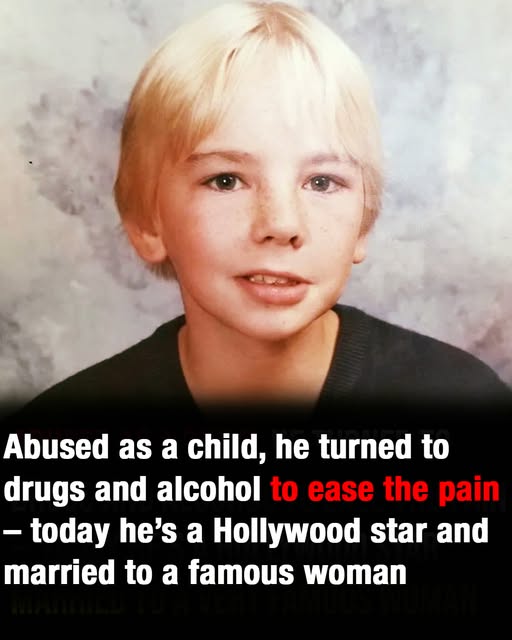
Dax Shepard comes out as a startling, necessary aberration in the manicured world of Hollywood, where public relations professionals meticulously manage every smile and social media post. He is a successful director, the charismatic and humorous spouse of America’s sweetheart Kristen Bell, and the voice behind one of the most well-known podcasts in the world. Beneath his silver-screen fame and comedic timing, however, is a history of systematic abuse, terrible suffering, and an unrelenting struggle with addiction. His path is more than just a celebrity success story; it is an unvarnished example of human resiliency and the arduous labor needed to end generational suffering cycles.
Shepard was born in the center of the American car industry on January 2, 1975, in Ypsilanti, Michigan. His father was a car salesperson, while his mother worked for General Motors, giving his boyhood a blue-collar setting that would eventually fall apart. His parents split when he was three years old, which led to a difficult childhood. But the worst wound was caused when he was sexually abused when he was seven years old. For more than a dozen years, he would bear this secret like a lead weight, which distorted his growing sense of identity and masculinity.
Such early trauma frequently has disastrous psychological effects. Shepard developed a poisonous internal narrative as a result of the quiet. Later, he would think back on the “insane thoughts” he had during those twelve years of hiding, questioning whether his orientation or identity had in any way encouraged the violation. When a victim of childhood abuse internalizes the shame of the abuser, it frequently results in this misconception. Shepard frequently uses a depressing statistic to highlight the seriousness of his predicament: just 20% of victims of sexual assault are able to prevent addiction. He felt that substance misuse was a biological and psychological inevitability rather than merely a decision.
Shepard was leading a nomadic lifestyle by the time he reached adolescence. He traveled the racetrack circuit with his mother between the ages of 14 and 18, a time in his life that lacked the conventional stability of high school. Although he briefly experimented with drugs at the age of 14, the real decline didn’t start until he was 18. He battled a terrible combination of alcohol, cocaine, and prescription drugs for years. This was a desperate attempt to drown out the memories of Beyer Hospital and the years of quiet anguish that followed; it was not the “party lifestyle” that is frequently glorified in movies.
Shepard had an indisputable artistic spark despite the turmoil in his personal life. After a while, he relocated to Los Angeles, where a buddy introduced him to the renowned improv and sketch comedy group The Groundlings. Shepard discovered a positive way to channel his energy here. He developed the improvisational abilities that would eventually make him a household name while training with future superstars like Octavia Spencer and Melissa McCarthy. His big break came in 2003 with Ashton Kutcher’s Punk’d, when he became a prominent performer thanks to his daring, “anything for a laugh” approach. Movies like Without a Paddle, Let’s Go to Prison, and Baby Mama brought him commercial fame, but it was a supporting part in the 2010 movie When in Rome that would change his soul’s course.
Shepard got to know Kristen Bell on the set of that romantic comedy. They were diametrically opposed on paper. Bell was the “good girl” from a steady, devout family who had managed her career with poise and control. Shepard was a damaged veteran of the Los Angeles underground, and he admitted that she found his past “terrifying.” Their relationship was a battleground for the first year and a half. Bell found it hard to accept that a man with such a turbulent life could dedicate himself to fatherhood, sobriety, and monogamy. However, Shepard discovered a fresh motivation to continue his recuperation as a result of this conflict. As a tribute to the advocacy that would become a pillar of their public lives, they famously postponed getting married until 2013, refusing to wed until same-sex marriage was allowed in California.
But rehabilitation is rarely a straight line. Shepard surprised his fan audience in 2020 when he revealed that he had relapsed after 16 years of sobriety on his podcast, Armchair Expert. After a motorcycle accident that necessitated surgery and prescription medicines, the relapse started. With startling quickness, the old patterns reappeared. However, the adult Shepard opted for radical candor, in contrast to the young child who concealed his assault for twelve years. He turned a time of apparent failure into a tutorial on how to deal with a slip in recovery by confessing to his wife and his community.
Shepard’s unwavering honesty with his daughters, Lincoln and Delta, now characterizes his existence. He cites his frequent attendance at AA meetings as a required “medicine” to ensure he continues to be the parent they deserve, rather than keeping his troubles a secret from them. He used to be a man who kept secrets, but now he uses his position to de-stigmatize the things that almost killed him.
Beyond his own recuperation, Shepard and Bell have emerged as powerful defenders of children’s rights. They played a key role in the enactment of California Senate Bill 606, which stiffened the punishment for photographers who harass public individuals’ children. Their argument was straightforward: their children did not choose a life in the spotlight, but they did. In sharp contrast to his previous “wild man” character, Shepard’s advocacy revealed a protective, grounded side.
The tale of Dax Shepard serves as a potent reminder that the individuals we see on television frequently deal with difficulties we cannot comprehend. His transformation from a wounded seven-year-old in Michigan to a prominent figure in the discussion of addiction and mental health shows that trauma need not be a life sentence. He has transformed his 20 percent probability of survival into a 100 percent commitment to a meaningful life with the help of his family and a dedication to ruthless honesty. He continues to be a ray of hope for anyone who believes that their past has prevented them from having a promising future, demonstrating that although you cannot alter where you began, you have every right to redefine where you end up.