
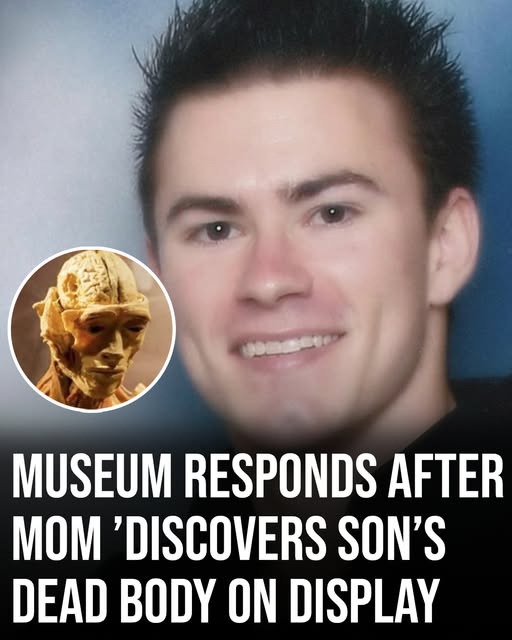
For Kim Erick, the loss of her son was just the start of a ten-year journey into a waking nightmare. The boundary between life and death is meant to be sacrosanct, a last curtain that offers a sense of serenity and closure for the grieving. Chris Todd Erick, her 23-year-old son, was discovered dead in his bed at his grandmother’s house in Midlothian, Texas, in 2012. Kim was not persuaded, despite the official police findings attributing his unexpected death to an undiagnosed cardiac disease that caused two distinct heart attacks. Before Kim could even comprehend the depth of her loss, Chris’s father and grandmother set up a quick cremation, which immediately deepened her grieving. She was given a necklace that was supposed to hold his ashes, but she had a strong gut feeling that something was terribly wrong.
When Kim eventually acquired police scene photos from the bedroom where Chris passed away, her suspicions were ignited. In her opinion, the pictures showed physical injuries and unsettling symptoms that were not included in the original medical reports. She started to believe that her son had endured 48 hours of anguish rather than passing away quietly in his sleep. Kim described the findings as a complete cover-up, even though a 2014 homicide inquiry found no evidence of foul play. Haunted by the thought that the remains in her necklace were not her son at all, she spent years looking for answers. Then, in a turn of events straight out of a psychological thriller, she entered a museum in Las Vegas and saw something that turned her blood to ice.
The Thinker, a plastinated human specimen, was on display as part of the world-famous Real Bodies exhibition. In order to display the complex skeletal and muscular structure of the human form, it was a seated figure with its skin removed. When Kim first viewed the figure, she saw her kid rather than an anatomical tool. According to her, Chris’s medical records and the evidence showed a very exact right temple skull fracture. There was no denying the physical similarity in her eyes, and the realization was excruciating. She thought she was witnessing her own child’s mutilated and exhibited remains turned into a popular tourist destination.
The accusations caused a stir in the museum sector and immediately led to a contentious legal dispute. Kim started a vigorous public campaign calling for DNA testing of the specimen in order to definitively establish its identity. However, Imagine Exhibitions Inc., the parent company of the Real Bodies exhibition, strongly denied her allegations. In a firm statement, they expressed their condolences for the family while maintaining that the claims had no merit. The museum claims that The Thinker was lawfully imported from China and had been a part of their ongoing exhibit in Las Vegas since 2004—eight years before to Chris Todd Erick’s death.
The show used the intricate plastination process—which can require up to a full year of laboratory work—to bolster their defense. They contended that in the short period after Chris’s death in 2012, it would have been logistically and biologically impossible to move his body to a facility that was plastinated and included into a worldwide touring exhibit. In order to confirm the museum’s timeline, archived photos of the display from the early 2000s were created. However, these rational explanations seemed like further layers of a conspiracy to a mother who was overcome by grief and a desire of closure. Shortly after her accusations became public, Kim watched in exasperation as the specimen was discreetly taken out of the Las Vegas exhibit. She stated that it was relocated to a place in Tennessee before she was completely unable to locate it, giving her the impression that her kid had been taken from her twice.
When hundreds of mounds of unidentifiable incinerated human remains were found strewn around the Nevada desert in July 2023, the narrative took an even more sinister turn. This revelation gave Kim a fresh, desperate lead. In an attempt to locate evidence of the particular plastination substances that could connect these desert remains to her son, she started requesting forensic testing. Because she feels that Chris was abandoned by the legal system in life and that she must now be his voice in death, her purpose has become one of unrelenting advocacy. Driven by a mother tie that needs a physical truth she has yet to discover, she rejects both the official autopsy results and the museum’s timetable.
This case brings to light the expanding ethical discussion about the public display of human remains and the openness of anatomical exhibits’ sourcing procedures. The emotional toll on a mother who feels she has witnessed her child on a pedestal is incalculable, even if the museum insists that all of its specimens are ethically procured and biologically untraceable. Every seated figure and anatomical diagram may serve as a reminder to Kim Erick of the son she lost and the answers she believes were kept from her. She keeps fighting against what she describes as a massive cover-up, clinging to the hope that Chris will eventually be brought home by a forensic finding or DNA test.
As of right now, the museum is sticking to its evidence, and the authorities have determined that there is no justification for reopening the case. Depending on who is narrating the story, the Thinker stays a ghost in the narrative, a specimen that either symbolizes a mother’s greatest tragedy or an achievement in medical education. For one woman in Texas, the exhibit is a house of horrors that she says contains tangible evidence of a life cut short and a body desecrated for financial gain, but for the general public, it is a place of wonder and education. Kim’s path continues to serve as evidence that, for some parents, a case is never fully resolved until the heart achieves serenity; without that serenity, the pursuit of the truth turns into a never-ending battle. The world is left wondering where the boundary between science and sacrilege actually lies as the mystery behind the Midlothian death and the Las Vegas show continues to be one of the most terrifying and contentious tales in modern history.