
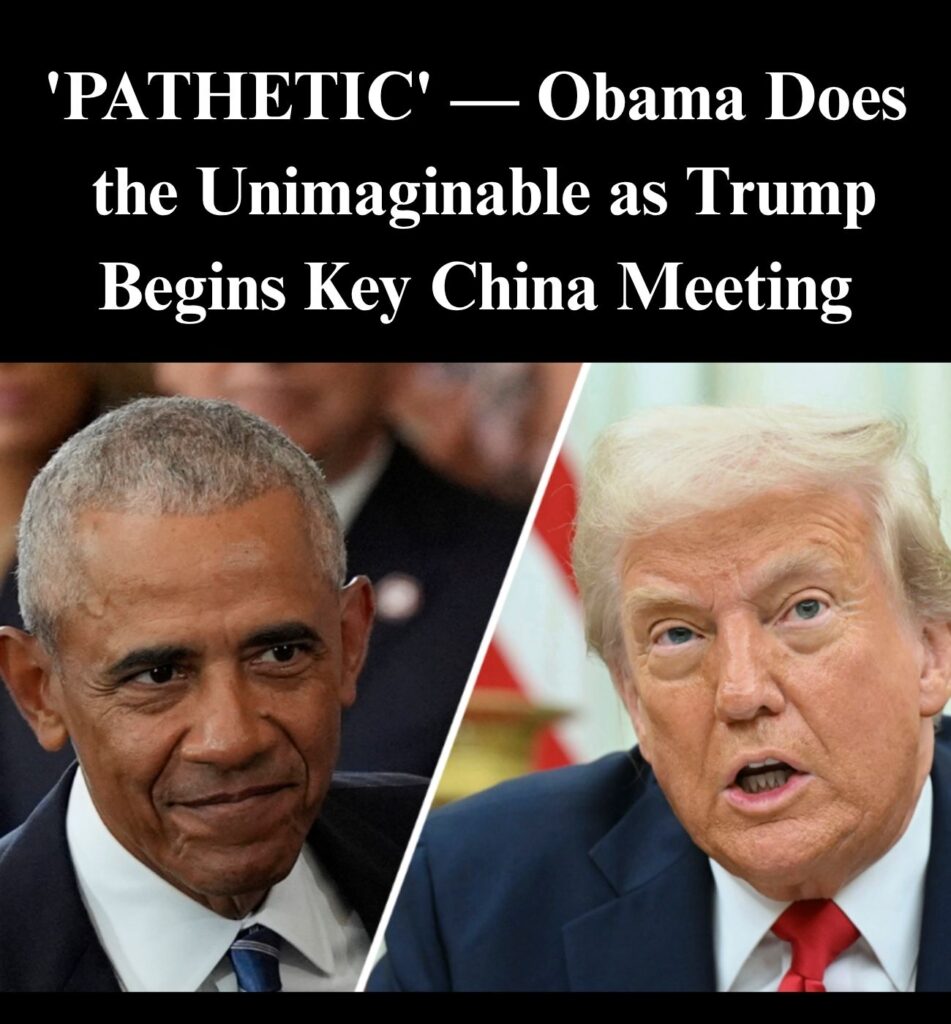
Barack Obama’s interview in Chicago was more than a nostalgic reflection; it was a calculated contrast. Calmly defending the Iran nuclear deal, he framed his diplomacy as the rational alternative to Trump’s hardline approach, emphasizing verification, international consensus, and a “last resort” standard for military force. His pointed claim that the agreement “worked” — backed, he said, by U.S. and even Israeli intelligence — was a direct challenge to Trump’s narrative of strength through strikes and sanctions.
At the very same moment, Donald Trump was halfway around the world, staging his own display of power. Stepping off the plane in China flanked by Elon Musk, Tim Cook, and Jensen Huang, he forced Beijing to confront America’s corporate elite face-to-face. Xi Jinping promised wider access, deeper cooperation, broader prospects. The White House echoed the optimism, hinting at expanded market entry and new Chinese investment. One president argued he secured peace without missiles; the other tried to secure dominance with markets and money. Between Tehran and Beijing, diplomacy and force, the battle over what American leadership should look like has never been more exposed.