
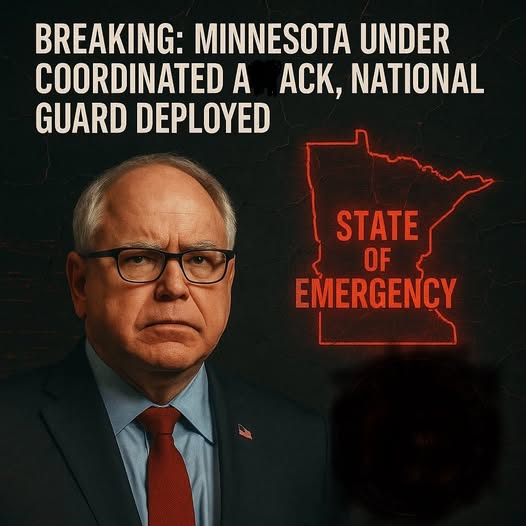
Earlier this week, Minnesota experienced what could be the most alarming digital attack on an American city thus far. The entire city of St. Paul went offline. No Wi-Fi. No servers. No internal infrastructure. A complete blackout.
Now, the National Guard is involved.
Governor Tim Walz has officially declared a state of emergency and has signed an executive order to activate the Minnesota National Guard’s cyber protection unit. Their objective? To ascertain what data — if any — was accessed, stolen, or compromised.
St. Paul Mayor Melvin Carter made a disturbing statement: “This was not a glitch. It was a deliberate, coordinated attack executed by an external actor who intentionally and criminally targeted our systems.”
This indicates that this was not merely a random outage. Someone has disrupted a U.S. city’s digital infrastructure… and very few are reporting on it.
What is even more concerning is the lack of response. There is no media frenzy. No national alarm. Just a few official statements and local news reports. Meanwhile, the data of an entire American city could potentially be in foreign hands.
Is this merely the beginning? Was this a trial run for something significantly larger? The National Guard has personnel on the ground — not for a hurricane or civil disturbance — but for a conflict in cyberspace.