
Fear is spreading almost as quickly as the virus itself.
In villages across eastern Democratic Republic of the Congo, silence now follows the sound of ambulance sirens. Families wake each morning wondering who will fall sick next, while exhausted health workers race from one community to another trying to stop an outbreak that has already stolen more than a hundred lives. Clinics are overcrowded. Protective masks and gloves have become symbols of survival. And behind every closed door is the possibility of another family grieving in isolation.
The outbreak of Ebola Virus Disease has reignited fears the world remembers all too well from previous epidemics. Officials warn that the virus is moving rapidly through vulnerable regions where conflict, displacement, and limited medical infrastructure make containment extraordinarily difficult. In provinces like Ituri, entire communities are living under the constant pressure of uncertainty. Parents watch children for the slightest fever. Neighbors avoid physical contact. Traditional mourning rituals — once acts of love and respect — have suddenly become dangerous.
The emotional toll is becoming impossible to separate from the medical crisis itself.
Residents describe villages transformed almost overnight. Markets that once buzzed with conversation now feel tense and half-empty. Some families hide sick relatives out of fear they will never return if taken to treatment centers. Others distrust officials entirely, believing rumors that spread faster than verified information. In outbreaks like this, fear becomes its own kind of infection, feeding panic, suspicion, and silence at the exact moment transparency matters most.
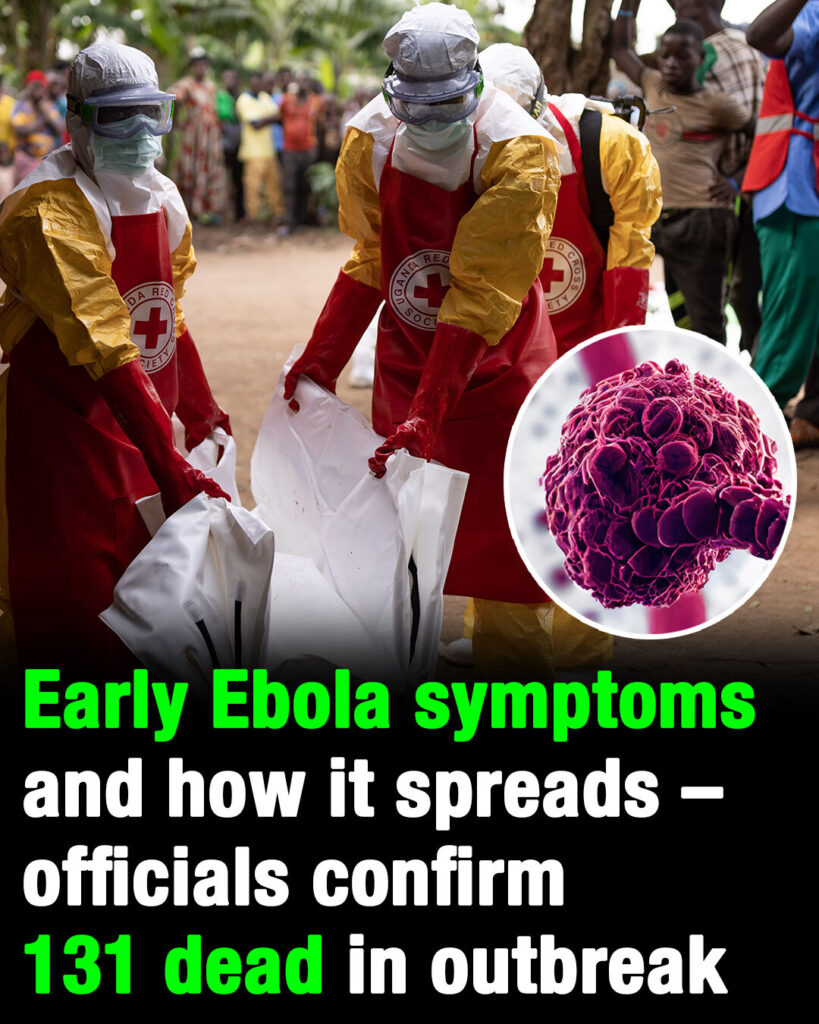
Meanwhile, teams of doctors, nurses, and international responders continue working under relentless pressure. Dressed head to toe in protective suits that conceal their faces and identities, they move through villages tracing anyone who may have been exposed. Every handshake, every caregiving moment, every funeral attended can create another chain of transmission. Contact tracers carefully document movements, monitor symptoms, and plead with communities to report illnesses early before entire households become infected.
The challenge is enormous because Ebola Virus Disease often begins deceptively.
At first, symptoms resemble countless other illnesses common in the region: fever, severe fatigue, headaches, muscle pain, sore throat. Many patients initially believe they are dealing with malaria, influenza, or exhaustion. But for some, the disease escalates with horrifying speed. Vomiting becomes relentless. Severe diarrhea drains the body. Stomach pain intensifies. Internal damage begins spreading through organs and blood vessels. In the most severe cases, unexplained bleeding appears — from gums, eyes, or internally — marking the terrifying progression that made Ebola infamous around the world.
Families often describe the speed of deterioration as the most traumatic part. Someone healthy days earlier suddenly becomes almost unrecognizable, weakened to the point of collapse. Loved ones are then forced into agonizing choices: care for them closely and risk infection themselves, or isolate them while they suffer largely alone.
Even survival rarely means a complete return to normal life.
Those who recover frequently carry lasting physical and emotional scars. Some survivors experience chronic joint pain, vision problems, nerve complications, or debilitating fatigue for months or years afterward. Many battle depression, anxiety, and survivor’s guilt after watching relatives die beside them in treatment wards. Children orphaned by outbreaks must rebuild lives shaped permanently by loss and stigma. Entire communities are left carrying invisible wounds long after infection rates decline.
Global health officials remain especially concerned because outbreaks can expand rapidly if early containment efforts fail. Borders in the region are active and porous, with constant movement between towns and neighboring countries. Even isolated infections crossing into new areas can create dangerous new clusters if not identified quickly. Reports that at least one American aid worker or traveler has been infected have only intensified international attention and anxiety surrounding the outbreak.
At the center of all of it is a race against time.
Vaccination campaigns, public education efforts, treatment centers, and rapid testing systems are being deployed as aggressively as possible. Scientists and medical teams know the world has more tools against Ebola than it did during earlier catastrophic outbreaks. Experimental vaccines and improved treatments have significantly increased survival rates when patients receive care early enough. But medicine alone cannot stop an epidemic fueled by fear, misinformation, violence, and overwhelmed healthcare systems.
That is why health experts continue emphasizing the same message over and over: awareness saves lives.
Recognizing symptoms early. Reporting exposure honestly. Avoiding unsafe burial practices. Trusting trained medical responders. These simple actions can mean the difference between containment and disaster. In regions already burdened by poverty and instability, public cooperation becomes as essential as medicine itself.
For now, though, uncertainty hangs over eastern Congo like a storm cloud.
Every new confirmed case raises fears of another chain reaction. Every recovered patient offers a fragile glimpse of hope. And every family waiting outside an isolation ward understands the terrible reality at the heart of outbreaks like this: until the virus is contained, nobody truly knows whose life will change next.