
US Economy News
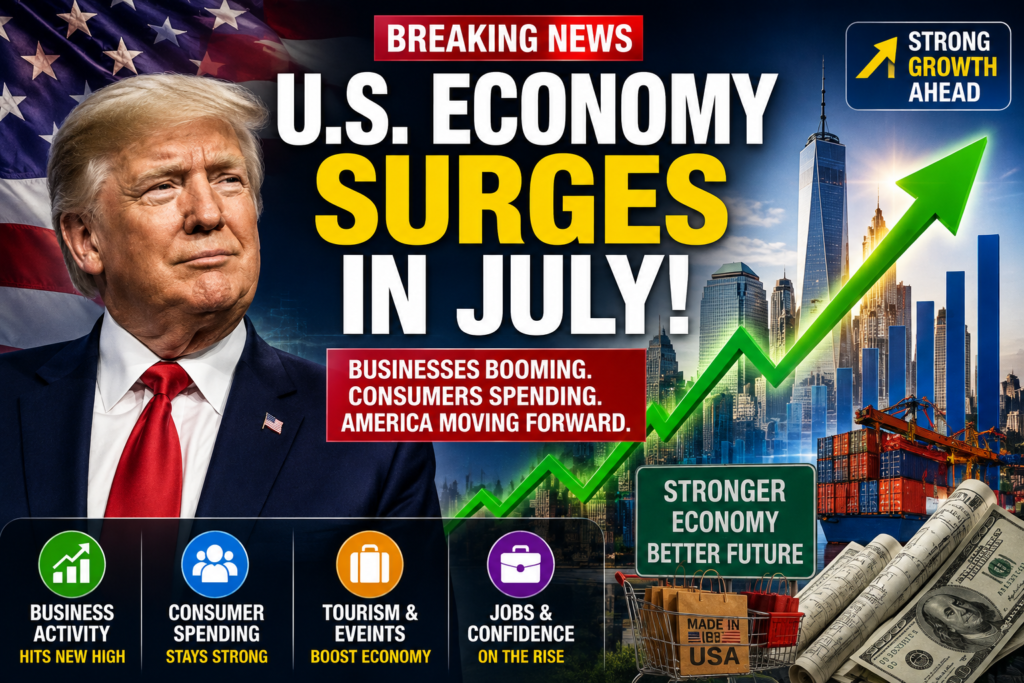
US business activity strengthened in July as consumer spending and tourism boosted the economy. Here’s what it means for businesses, workers, investors, and American families.
US Business Activity Surges in July as Consumer Spending and Tourism Fuel Economic Growth
NEW YORK — The American economy showed fresh signs of strength during July as businesses across multiple industries reported increased customer demand, stronger sales, and improving business confidence. New economic data suggests that consumers continued spending despite concerns about inflation and global uncertainty, giving businesses a much-needed boost during the summer season.
The improvement comes at a time when many economists had expected slower economic growth following months of uncertainty surrounding interest rates, energy prices, and international trade. Instead, businesses in sectors ranging from restaurants and hotels to transportation and entertainment experienced noticeable increases in activity.
Experts say several factors contributed to the stronger performance, including increased tourism, holiday spending around Independence Day, and large sporting events that attracted visitors from across the United States and around the world.
While economists remain cautious about challenges that could affect growth later this year, July’s performance has provided a more optimistic outlook for many businesses and investors.
A Strong Start to the Summer
The summer months traditionally represent one of the busiest periods for many American businesses. Families travel during school vacations, tourists visit major cities, and outdoor events encourage spending across restaurants, hotels, airlines, and retail stores.
This year appears to be no exception.
Hotels in several popular destinations reported higher occupancy rates compared with earlier months, while restaurants experienced increased reservations as millions of Americans continued travelling throughout the country.
Retailers also benefited from seasonal shopping as consumers purchased clothing, electronics, travel accessories, and household products during major promotional events.
For many small businesses, these increases provided welcome relief after dealing with months of economic uncertainty.
Consumer Spending Continues to Support the Economy
Consumer spending remains one of the most important drivers of the United States economy.
When Americans continue purchasing products and services, businesses generate more revenue, hire additional workers, and expand operations.
During July, spending remained relatively healthy despite concerns over higher living costs.
Many households continued spending money on:
- Family vacations
- Restaurants
- Entertainment
- Sporting events
- Travel
- Online shopping
- Home improvement projects
Economists believe the resilience of American consumers has played a significant role in preventing a sharper economic slowdown.
However, experts also note that many families remain cautious and continue looking for discounts and value when making purchasing decisions.
Tourism Gives Local Economies a Major Boost
Tourism emerged as another major contributor to economic activity during July.
Cities hosting major sporting events, concerts, festivals, and conventions experienced significant increases in visitor spending.
Hotels, transportation companies, local restaurants, retail stores, museums, and entertainment venues all benefited from higher visitor numbers.
Small businesses located near tourist attractions also reported stronger customer traffic.
Business owners say that increased tourism not only boosts immediate sales but also creates temporary employment opportunities and supports local economies throughout the summer season.
Businesses Report Improving Confidence
Another encouraging sign comes from business confidence.
Many company executives reported stronger expectations for future sales compared with previous months.
Manufacturing companies experienced stabilizing demand after periods of slower production, while service industries continued expanding due to increased customer activity.
Hiring also remained relatively steady across many industries, although employers continue facing challenges in finding qualified workers for certain positions.
Business leaders remain hopeful that stable consumer spending will continue supporting growth through the remainder of the year.
Inflation Still Remains an Important Concern
Despite encouraging economic data, inflation continues to influence both consumers and businesses.
Higher costs for fuel, transportation, insurance, and some imported products continue affecting operating expenses for companies.
Many businesses have attempted to avoid passing all additional costs directly to customers, fearing that higher prices could reduce demand.
Consumers likewise remain sensitive to price increases and are increasingly comparing prices before making purchases.
Economists say inflation appears significantly lower than its previous peak, but price stability remains one of the most closely watched indicators for future economic performance.
Stock Markets Watch Economic Momentum Closely
Financial markets responded cautiously as investors analysed the latest economic reports. Stronger business activity is generally viewed as a positive sign because it suggests companies may continue generating solid earnings.
However, investors are also watching inflation, interest rates, and global events. If economic growth remains strong while inflation rises again, policymakers could decide to keep borrowing costs higher for longer.
Analysts say market volatility is likely to continue as investors react to new economic reports over the coming months.
For long-term investors, a healthy economy often creates opportunities across sectors including technology, manufacturing, consumer goods, travel, and financial services.
What This Means for American Workers
The improving business environment could bring encouraging news for workers across the United States.
When businesses receive more customers, they often need additional staff to meet demand. Restaurants may hire servers, hotels may recruit housekeeping staff, airlines may increase hiring, and retailers may expand seasonal employment.
Although hiring has slowed compared with the rapid recovery following the pandemic, labour demand remains relatively healthy in many industries.
Workers with specialised skills in healthcare, technology, engineering, logistics, and construction continue to be particularly sought after.
Economists believe stable employment remains one of the strongest pillars supporting consumer confidence.
Small Businesses Continue Facing Challenges
Despite positive economic indicators, small businesses still face significant obstacles.
Many business owners continue dealing with:
- Higher operating costs
- Rising insurance premiums
- Increased wages
- Supply chain adjustments
- Expensive commercial rents
- Higher borrowing costs
Some companies have invested in automation and artificial intelligence to improve efficiency while reducing long-term costs.
Others are focusing on customer loyalty programmes, digital marketing, and online sales to remain competitive.
Experts say innovation will remain essential as businesses adapt to changing economic conditions.
Consumer Confidence Shows Signs of Improvement
Consumer confidence plays an important role in determining future economic growth.
When Americans feel secure about their jobs and financial situation, they are generally more willing to spend money on travel, vehicles, entertainment, electronics, and home improvements.
Recent surveys suggest that many consumers remain cautiously optimistic despite ongoing concerns about prices.
Families continue prioritising essential purchases while looking carefully for discounts and promotions before making larger purchases.
Retail analysts expect this trend to continue throughout the remainder of the year.
Risks That Could Slow Growth
Although July produced encouraging results, economists warn that several risks remain.
Among the biggest concerns are:
Inflation
Unexpected increases in fuel or food prices could reduce consumer spending.
Interest Rates
Higher borrowing costs may discourage businesses from expanding or consumers from making large purchases.
Global Conflicts
International tensions can affect energy markets, transportation costs, and global supply chains.
Weather Events
Hurricanes, floods, droughts, and wildfires have the potential to disrupt businesses across several states.
Consumer Debt
Higher credit card balances and loan repayments could eventually limit household spending.
Experts emphasise that monitoring these factors will be important during the second half of the year.
What Economists Expect Next
Most economists expect the American economy to continue growing, although perhaps at a slower pace than during the strong summer months.
Business investment, consumer spending, and employment will likely remain the three most important indicators.
If inflation continues easing while employment stays strong, many analysts believe the United States could avoid a significant economic slowdown.
However, unexpected geopolitical events or financial market instability could quickly change that outlook.
Frequently Asked Questions
Why is business activity important?
Business activity reflects how much companies are producing, selling, and investing. Strong activity usually supports economic growth and employment.
Does stronger business activity mean inflation is over?
Not necessarily. Inflation has eased compared with previous highs, but prices remain elevated for many goods and services.
Will consumers benefit?
If businesses continue expanding, consumers may benefit from improved job opportunities and stronger economic stability. However, prices and borrowing costs will still influence household budgets.
Should investors pay attention?
Yes. Economic reports often influence financial markets because they affect expectations for company earnings, interest rates, and future growth.
Conclusion
July’s economic performance provided encouraging evidence that the United States economy continues demonstrating resilience despite ongoing challenges.
Healthy consumer spending, strong tourism, and improving business confidence helped support growth during the summer, offering optimism for businesses, workers, and investors alike.
At the same time, inflation, interest rates, global uncertainty, and consumer debt remain important factors that could influence future economic performance.
As new economic reports become available, policymakers, businesses, and households will continue monitoring the nation’s financial health closely.
For now, July’s stronger-than-expected business activity offers another indication that the American economy continues adapting to a changing global environment.